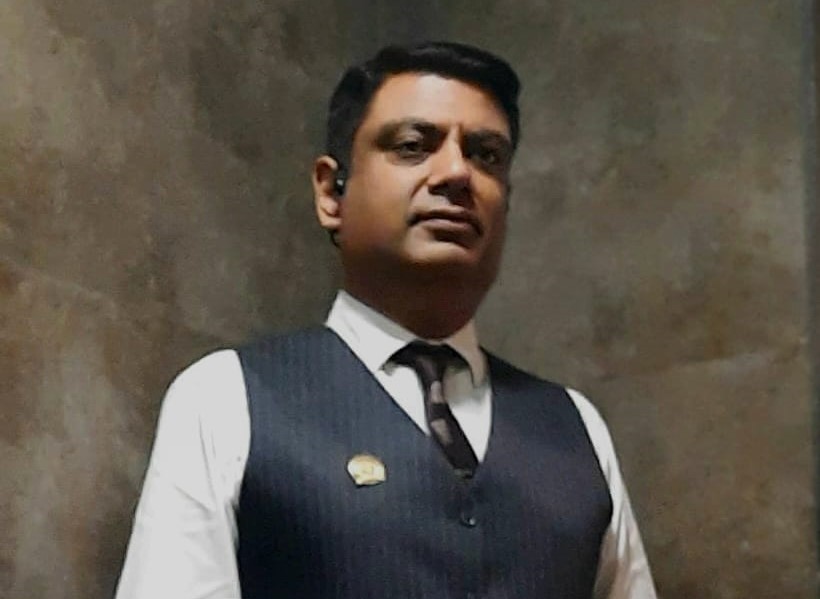
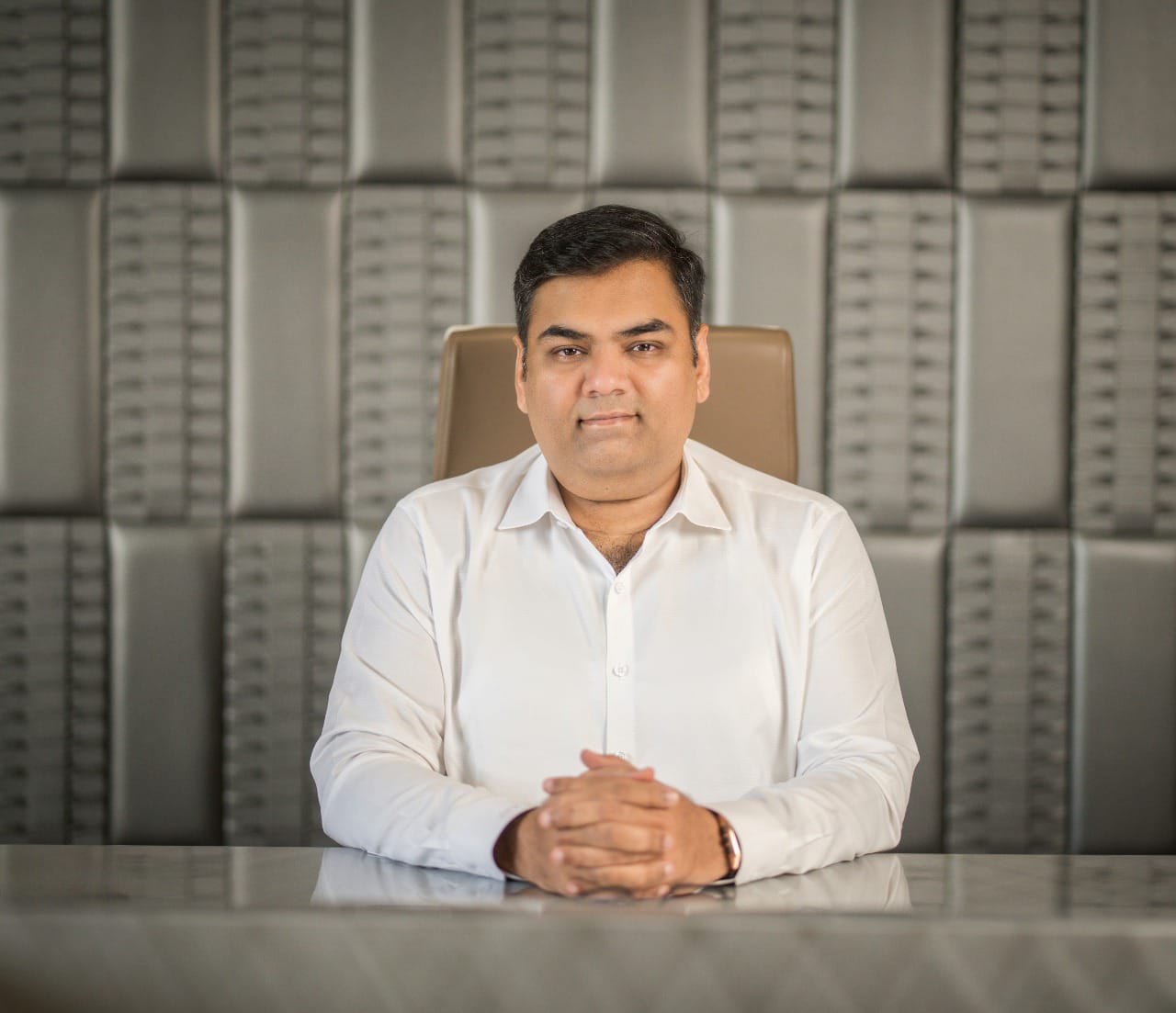
As higher education undergoes rapid transformation driven by artificial intelligence, digital innovation, and changing industry expectations, universities are reimagining the way they educate future-ready graduates. In this exclusive interview with Education Edge Global, Dr. Somnath P. Patil, Pro-Chancellor of Dnyaan Prasad Global University (DPGU), by Dr. D. Y. Patil Unitech Society, Pune, shares his insights on the future of higher education, industry-academia collaboration, sustainability, digital transformation, and the evolving role of universities in preparing students for an increasingly dynamic world.
Your academic journey spans information technology, law, management, and entrepreneurship. How have these diverse disciplines influenced your approach to leadership in higher education?
Each of these fields has given me a different lens to look at the same problem, and that has been more useful than staying within one subject. Information technology taught me to think in systems, to ask how one part of an institution affects another. Law taught me to read carefully, to look for what is actually written rather than what is assumed, and to respect process. Management gave me tools to plan and to measure whether an idea is actually working, not just whether it sounds good. Entrepreneurship taught me to be comfortable with uncertainty, and to treat a setback as information rather than failure. When I sit down to think about a decision at Dnyaan Prasad Global University (DPGU), by Dr. D. Y. Patil Unitech Society, Pune, I find myself drawing on all four without really separating them. A curriculum question becomes a systems question, a compliance question, a resourcing question, and a risk question, all at once. I think that mix has made me a more patient and more practical leader, someone who tries to understand a problem fully before proposing a solution.
Education is undergoing rapid transformation with artificial intelligence, digital learning, and changing industry expectations. How do you envision the future of universities over the next decade?
I think the university of the next ten years will look familiar in its purpose but very different in its daily working. The purpose remains the same: to help a young person think clearly, learn a discipline deeply, and become capable of contributing to society. What will change is how that happens. Classrooms will rely far less on one-way lectures and far more on discussion, problem solving, and guided practice, because information itself is now available everywhere. At Dnyaan Prasad Global University (DPGU), by Dr. D. Y. Patil Unitech Society, Pune, we already see students who want the classroom to add something they cannot get from a screen, and that pushes us to focus on judgment, communication, and applied skill. Universities will also need to become more comfortable working across disciplines, since real problems in industry rarely stay inside one subject. I expect closer, more continuous ties with employers, not just occasional visits, but shared projects and shared assessment of what a graduate should be able to do.
You were among the early proponents of ERP and Health Information Systems in educational institutions. Looking back, what were the biggest challenges in driving digital transformation, and what lessons did you learn?
The technology itself was rarely the hardest part. The harder part was getting people across different departments to agree on a common way of recording and sharing information, because everyone had their own method that worked well enough for them individually. Bringing in an ERP or a health information system meant asking people to give up a familiar habit for a shared one, and that always takes longer than the technical installation. I learned that training and patience matter as much as the software itself, and that a system only succeeds if the people using it every day feel it makes their work easier, not just more visible to management. I also learned to involve staff early, before decisions were finalized, because their practical knowledge of daily bottlenecks was often more valuable than anything a vendor could tell us. Those lessons still guide how we approach any new system at Dnyaan Prasad Global University (DPGU), by Dr. D. Y. Patil Unitech Society, Pune: start with the people who will use it, and let the technology follow their needs.
Many graduates today possess degrees but often lack industry-ready skills. How can universities bridge the gap between academia and employability?
I think this gap grows whenever a curriculum is designed once and then left unchanged for years, while industry keeps moving. The first step is to keep talking to employers regularly, not as a formality but as an honest exchange about what is missing in new graduates. The second step is to bring more real work into the classroom, through projects, internships, and problems drawn from actual organizations, so that students practice applying knowledge rather than only storing it. At DPGU we try to treat industry exposure as a running thread through a programme rather than a single placement exercise at the end. Soft skills also deserve more serious attention: the ability to write clearly, to work in a team, to manage time, and to explain one’s thinking. A student can know a subject well and still struggle in a workplace if these are missing. Employability, in the end, is less about adding one more course and more about changing daily learning habits.
Sustainability is one of your key areas of interest. How can educational institutions integrate environmental responsibility into everyday campus life rather than treating it as a standalone initiative?
Sustainability works best when it stops being a special event and becomes an ordinary part of how a campus runs. That means looking at energy use in buildings, water management, waste segregation, and green spaces as everyday operational choices, not occasional awareness drives. It also means bringing these themes into what is actually taught, so that an engineering student, a management student, and a hospitality student all encounter environmental thinking within their own subject rather than only in a separate seminar. At Dnyaan Prasad Global University (DPGU), by Dr. D. Y. Patil Unitech Society, Pune, I encourage staff and students to see small daily choices, how a laboratory disposes of material, how a hostel manages water, how an event plans its waste, as part of the same responsibility as any larger policy. When sustainability sits inside daily decisions rather than a single department, it tends to last longer and involve far more people, because everyone can see their own part in it rather than leaving it to a committee.
Artificial intelligence is reshaping every industry. How should universities prepare students to work alongside AI while retaining critical thinking and creativity?
My view is that artificial intelligence should be treated as a capable assistant, not a replacement for a student’s own thinking. Students need to understand what these tools are good at, handling routine and repetitive work quickly, and what they are not good at, judging context, weighing values, and taking responsibility for a decision. Universities should teach students to use such tools honestly and well, while still insisting that the student can explain and defend their own reasoning without relying on the tool. At Dnyaan Prasad Global University (DPGU), by Dr. D. Y. Patil Unitech Society, Pune, we try to design assessments that reward genuine understanding and original thinking, rather than only a finished output, because a polished answer no longer proves that a student has understood the underlying idea. Creativity, curiosity, and the willingness to question an answer rather than accept it are becoming more valuable, not less, precisely because routine tasks are increasingly handled by machines. That is where human judgment will continue to matter.
Technology has made education more accessible, but it has also created new challenges. How do you strike the right balance between digital learning and human interaction?
Digital tools are genuinely useful for reach and flexibility, allowing a student to revisit a lecture, access material at their own pace, or study from a distance. But learning is also a social process, built through conversation, through a teacher noticing confusion on a student’s face, and through peers challenging each other’s ideas, and none of that transfers fully onto a screen. At DPGU we try to use technology for what it does well, delivering content, tracking progress, offering flexibility, while keeping the classroom and the campus for what only human presence can offer: mentorship, debate, and a sense of belonging to a community of learners. I do not think the answer is to choose one over the other permanently. It is to keep asking, for each subject and each activity, whether a screen genuinely helps the student learn better, or whether it is simply convenient for the institution to deliver it that way.
Finally, what message would you like to share with students, educators, researchers, and aspiring entrepreneurs who are preparing for the future?
Stay curious about things outside your own subject, because the most useful ideas I have had in my own career came from mixing fields rather than staying inside one. To students, I would say that a degree is the beginning of learning, not the end of it, and the habits you build now, reading carefully, asking questions, finishing what you start, will matter more than any single mark on a transcript. To educators, keep listening to your students and to industry in equal measure, because both tell you something true about what is missing. To researchers, choose questions that matter to real people, not only ones that are easy to publish. To young entrepreneurs, be patient with failure; it is rarely final, and it usually teaches you something a success cannot. At Dnyaan Prasad Global University (DPGU), by Dr. D. Y. Patil Unitech Society, Pune, we try to build an environment where all of this is possible, and I hope every student who passes through carries that habit of curiosity forward.