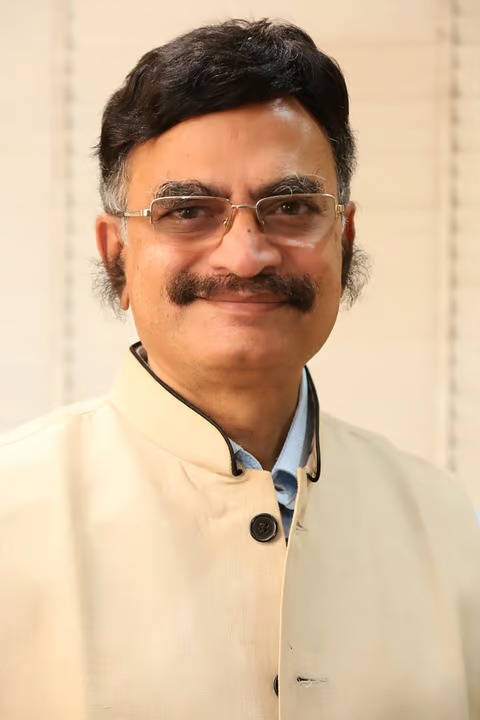
By: Kushal Raj Chakravorty, Founder & Managing Trustee, Lotus Petal Foundation
For years, India’s education conversation focused on one goal: getting children into schools. And to a large extent, that goal has been achieved. According to ASER 2024, enrollment rates across the country have consistently improved, with rural enrollment for children aged 6–14 remaining above 95%. Yet, a more difficult question now confronts the education system: what are children actually learning once they enter classrooms?
Because the real challenge in Indian education today is no longer access alone. It is quality. Across thousands of schools, particularly in underserved and rural communities, students continue to face limited access to experienced teachers, subject experts, and consistent academic support. Many schools struggle with shortages in Science, Mathematics, and English educators. In some cases, a single teacher manages multiple grades and subjects simultaneously. The result is a widening learning gap between students in resource-rich environments and those growing up in economically disadvantaged regions.
This is where live digital classrooms are beginning to emerge as one of the most important disruptions in Indian education. Not because they replace teachers, but because they extend the reach of good teaching.
Beyond Recorded Videos: Why Live Learning Matters
The pandemic familiarised millions of students with online education. But it also revealed an important truth, passive digital content alone cannot solve learning inequality. There is a significant difference between watching a recorded lecture and participating in a live classroom. Recorded videos may support revision, but live learning creates engagement. Students can ask questions in real time, interact with educators, participate in discussions, and receive immediate feedback. The classroom becomes active rather than transactional.
That human element matters deeply, especially for younger learners and first-generation students who often require continuous guidance and encouragement. The future of education is therefore unlikely to be fully online or fully traditional. Instead, it will combine physical classrooms with digitally enabled live instruction that brings quality teaching into places where it was previously inaccessible.
India’s Quality-at-Scale Challenge
India’s education system is not short of talented teachers. The challenge is that quality teaching remains unevenly distributed. Students in metropolitan schools often benefit from specialised educators, exposure-based learning, and structured academic ecosystems. Meanwhile, students in remote or underserved regions may never encounter the same level of teaching support despite having equal potential.
Live digital classrooms can help bridge that divide. National initiatives such as the National Education Policy (NEP) 2020, DIKSHA, and PM eVIDYA have already highlighted the role of technology in expanding educational access. However, the real transformation happens when technology is used not merely to distribute content, but to deliver consistent, human-led instruction at scale.
A student sitting in a rural classroom today can learn directly from an experienced educator located hundreds of kilometres away. Schools struggling to recruit specialised teachers can access live sessions aligned to curriculum needs. Geography slowly becomes less of a barrier to quality learning, which changes the equation entirely.
Strengthening Schools, Not Replacing Them
This belief led to the development of Vidya Sahyog, a live interactive digital learning initiative designed to strengthen underserved and government school ecosystems at Lotus Petal Foundation. The model is built around a simple idea: children should not be denied quality education because of where they are born.
Through live two-way digital classrooms, students participate in interactive sessions conducted by trained educators from dedicated teaching studios. These classes are curriculum-aligned, multilingual, and integrated directly into school schedules. Importantly, the model works alongside existing teachers and schools rather than creating a parallel system.
Today, Vidya Sahyog is reaching more than 11,500 students across 275+ partner schools in 16 states, delivering over 1,03,000 hours of live instruction since 2021. The initiative is also supporting broader government school transformation efforts by improving conceptual learning, strengthening classroom engagement, and ensuring continuity in education for students who are often at risk of falling behind.
The Real Impact Goes Beyond Academics
The impact of live digital classrooms extends far beyond exams. Students become more confident communicating, asking questions, and engaging with technology. Exposure to structured digital learning environments builds familiarity with tools and systems that increasingly define higher education and employment opportunities. For first-generation learners, these experiences can fundamentally reshape aspirations.
A child who receives consistent academic support is more likely to stay in school longer, transition into higher education, and eventually access better livelihood opportunities. Education begins to function not merely as schooling, but as long-term social and economic mobility. That is why this shift matters. India’s next education disruption will not come from technology alone. It will come from ensuring that quality teaching is no longer determined by geography. The classroom of the future may still look familiar. Students sitting together. A local teacher present. A school rooted within its community.
But increasingly, the best teacher in that classroom may be reaching students live from somewhere else. And for millions of children across India, that could change everything.