
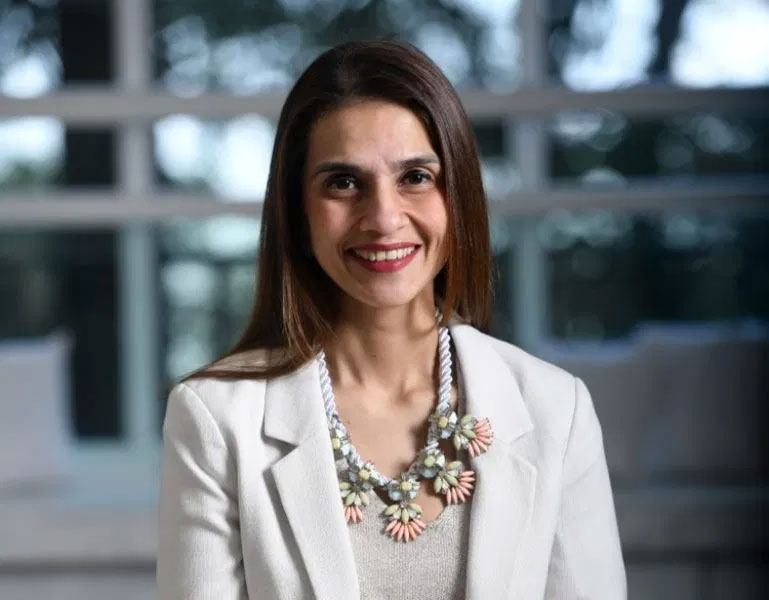
By: Fatema Agarkar, Educationist and Founder of ACE (Agarkar Center of Excellence).
Just the other day, while listening to a podcast where the discussion centered on the risks that plague Generation Next (the 2000 era kids) – the worry was that this generation feels they already know so much, and no body can ‘teach’ them. Confusing ‘access’ for ‘understanding’ as Gemini becomes now an advertised feature on media channels to be used in everyday functions which the podcast was pointing out tends to psychologically affect the way the generation ‘gives’ up instead of ‘working it out.’ It’s called emotional numbness in our education circles (they simply ‘do not react’ or care) and this is indeed a reflection point for all of us as adults creating this technology and providing access – what is the most appropriate mentoring that children need without leaving them isolated in this world that they grow up in. Given this ‘ease’ of availability of information without the hustle of primary or secondary data acquisition – asking experts, teachers, parents, researching, reading books, being present in class discussions, leaves students ‘accessing information,’ today as they simply have to ‘ask the question’. However, the responses if you are not alert, can be misleading and have dire consequences if you are not ‘smart’ enough to tell that extended questions get you no real help!
Generation Beta growing up in a world that is at mercy to this access is at risk of this becoming a handicap instead of a support system. Mind you I am not referring to a Golf handicap but a ‘crutch’ as we are making children dependant on an external source and the worry is that their inherent logic and reasoning would be compromised for they stop the basic first steps such as communication and subsequently research using various mediums. The fact that I bring in Golf in my conversation simply tells you what impact sports and physical fitness has in our family especially since my husband is one! It’s not the physicality alone but the softer skills associated with sports that also matter. Mood regulation, team work, coping mechanism not to mention very important, sleep regulation.
The fact that many educators like me, as the 70s ‘kids’ value podcasts as much as we value books for the sheer variability and exposure the medium provides in terms of accessing information is an interesting trend but balancing the usage and dependency at the same time by accessing the ‘tried and tested’ practices of reading is also be to noted. This means the ability to think, make calculative decisions, adapt and optimise are skills that hold good in a rapidly changing world, and must hold true for the generation beta too.
The learning environment in kindergarten therefore needs more creativity and thought when planning from design to what is ‘shared’ and discussed in classrooms. For me personally, the Adaptability Quotient is a conscious skill we need to work on for the tiniest citizens of our country. The kindergarten set up which is the first step a child takes into the world of formal education must be a well structured and all rounded programme of learning with educators with experience and skill planning what defines the curriculum framework for it isn’t simply about knowledge transfer but about the ‘softer’ skills which comes with experience.
What does all this mean for a parent and look like for those nurturing little children?
Well for starters acquiring skills to ask the ‘right’ questions and not simply a question means more exposure and more hands on experiences to problem solving and decision making from a young age. Little children must have the freedom to understand first, discover and retain their curiosity and love for asking questions and in time fine tune that to be able to probe further. This therefore categorically shifts the knowledge based era to the thinking era.
Their ease of access needs to be recognised and accepted and moulded and blended in a way that helps the way they learn, and also drive more learning instead of ‘satisfaction’ and ‘fatigue’ and urge them into more ‘problem solving’.
For the fatigue to not ‘kick-in’ early, their exposure to physical sports and creative and performing arts is something that is non negotiable in my books, and that alone leads to a healthier balance of access to screens vis a vis optimisation of access to information via screens. Physical exposure both indoor and outdoors (and I will throw in daily tasks that we are replacing of executive functions back in the ‘play’). Childhood is about rest at night with early bedtimes and being ‘on the move’ during the day. Meals become a scientific requirement to match this ‘output’ and cut out the short cuts that preservative food has made possible by valuing some time tested balanced meals as a thinking process. Just the other day a parent told me her 6 year old struggling to eat two boiled eggs before school found a solution for her mum. She said, ‘Mum why don’t you tell me how much protein, fibre, fat and carbohydrates I need in a day, and then I can spread it out so that I am happier and you are too, as there is no rule that everything had to be stuffed in the morning itself’. Wow, this explains what I mean by logic and reasoning, accessing information but putting to use sensibly. Problem solving needs to look like this in classrooms as opposed to telling them ‘eat a kings breakfast!’ because it is good for you.
So the important life skills – adaptability and balance, decision making and emotional regulation, time management and discipline should be prioritised as well as communication and ‘hustle’, small talk and social engagement as much the technical academic skills.
Numeracy and Language skills need to be based in a rationale to provide children the ability to use those skills to build further. Ultimately AI will need more content creators and researchers to be able to drive those responses, engineers to think about sustainability and ethics will become a big part of the world tomorrow. For this, the skills of being aware, smart thinkers and adaptability emerge as real winners.
And the foundation is how we allow them to drive the changes that make the world a safer, more productive but happier place. Childhood learning therefore must be able values and ethics, about culture and traditions that help them become more grounded and better human beings.
Learning at kindergarten is more important than it has ever been in our history as a civilisation and therefore more passion and compassion, more personalised learning and more conversations of understanding the world around them to be able to create better solutions is what makes their stepping stone into formal education more authentic.