As the nature of work and the demands of the economy continue to evolve, educational institutions are increasingly being pushed to look beyond traditional academic outcomes. The focus is shifting towards creating learning environments where students can apply knowledge, experiment with ideas and develop solutions to real-world challenges.
This evolution is also changing the role of universities. Rather than preparing students only for existing career pathways, institutions are increasingly looking at how education can equip young people to create opportunities, pursue entrepreneurship and respond to emerging challenges.
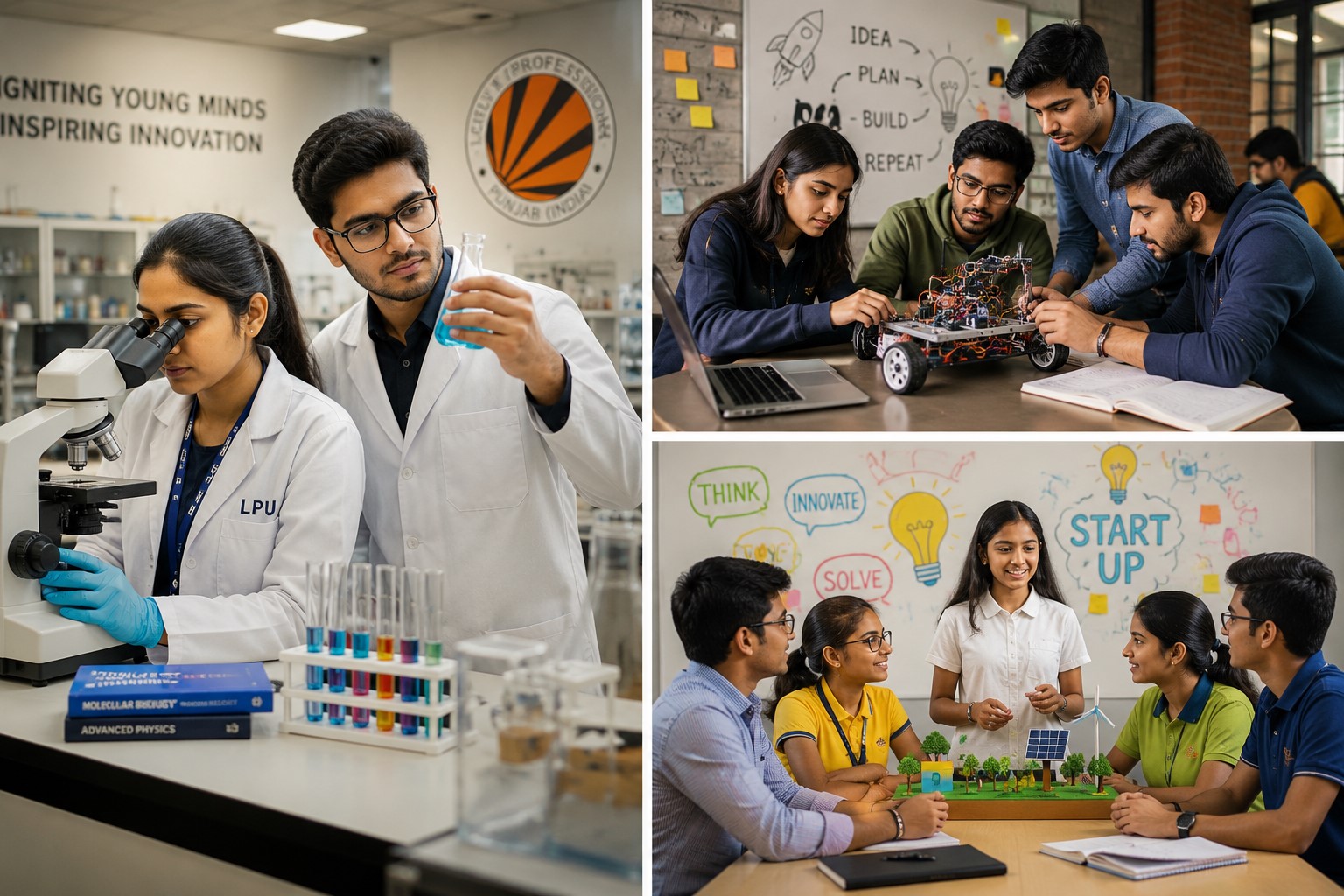
At Lovely Professional University, this approach is reflected through greater emphasis on experiential and student-led learning. Students are provided opportunities to work on live projects, engage with industry, explore emerging technologies and pursue entrepreneurial ideas. Initiatives such as Earn While You Learn further connect academic learning with practical exposure, enabling students to understand how their skills can translate into real-world applications.
Dr. Sorabh Lakhanpal, Head of Student Welfare Wing, Professor & Executive Dean, Lovely Professional University, believes that giving students greater ownership of their learning is central to this transition. “Universities today must move beyond preparing students for existing careers and help them build the skills and confidence to create opportunities of their own. This requires a learning environment where students have greater ownership of their learning and can connect academic knowledge with real-world experiences.”
According to him, such exposure needs to go beyond technical or subject-specific knowledge. Opportunities to experiment, collaborate and solve practical problems can help students develop communication, adaptability, problem-solving and entrepreneurial thinking alongside their academic capabilities. The larger objective is to create an education ecosystem where students have the freedom to explore ideas and translate them into action.
This shift is not limited to higher education. Schools are also beginning to place greater emphasis on inquiry, experimentation and multidisciplinary learning, recognising that innovation-oriented thinking needs to be nurtured from an early stage.
At Lotus Petal Foundation, this philosophy is reflected in an emphasis on research, inquiry, experimentation and problem-solving within the learning environment. Kushal Raj Chakravorty, Founder and Managing Trustee, Lotus Petal Foundation, sees this as an important part of preparing young learners for a changing world.
“I believe education must go beyond textbooks and exams. A truly contemporary institution creates space for research, inquiry, experimentation, and problem-solving to lead to real-world outcomes. Innovation begins the moment we encourage students to question, explore, and find solutions to the problems around them. This is the culture we strive to build at Lotus Petal.”
The approach also places importance on combining technology with hands-on and multidisciplinary learning. Project-based activities and exposure to real-world challenges can allow students to develop creativity, communication, collaboration and critical thinking while learning to apply concepts beyond the classroom.
As Chakravorty puts it, “A future-ready education combines technology with hands-on, multidisciplinary learning.” He believes that when students are encouraged to connect classroom learning with practical experiences and turn ideas into action, they become better equipped to take initiative and contribute meaningfully to society.
Across educational institutions, this growing emphasis on application-oriented learning points towards a broader change in how educational success is being defined. Academic knowledge remains important, but its ability to translate into problem-solving, innovation, employability and social impact is becoming equally significant.
The opportunity for institutions now lies in building stronger connections between classrooms, industry, research, entrepreneurship and the communities around them. By giving students the space to question, experiment and create, education can become not only a pathway to employment but also a catalyst for innovation and wider economic growth.