
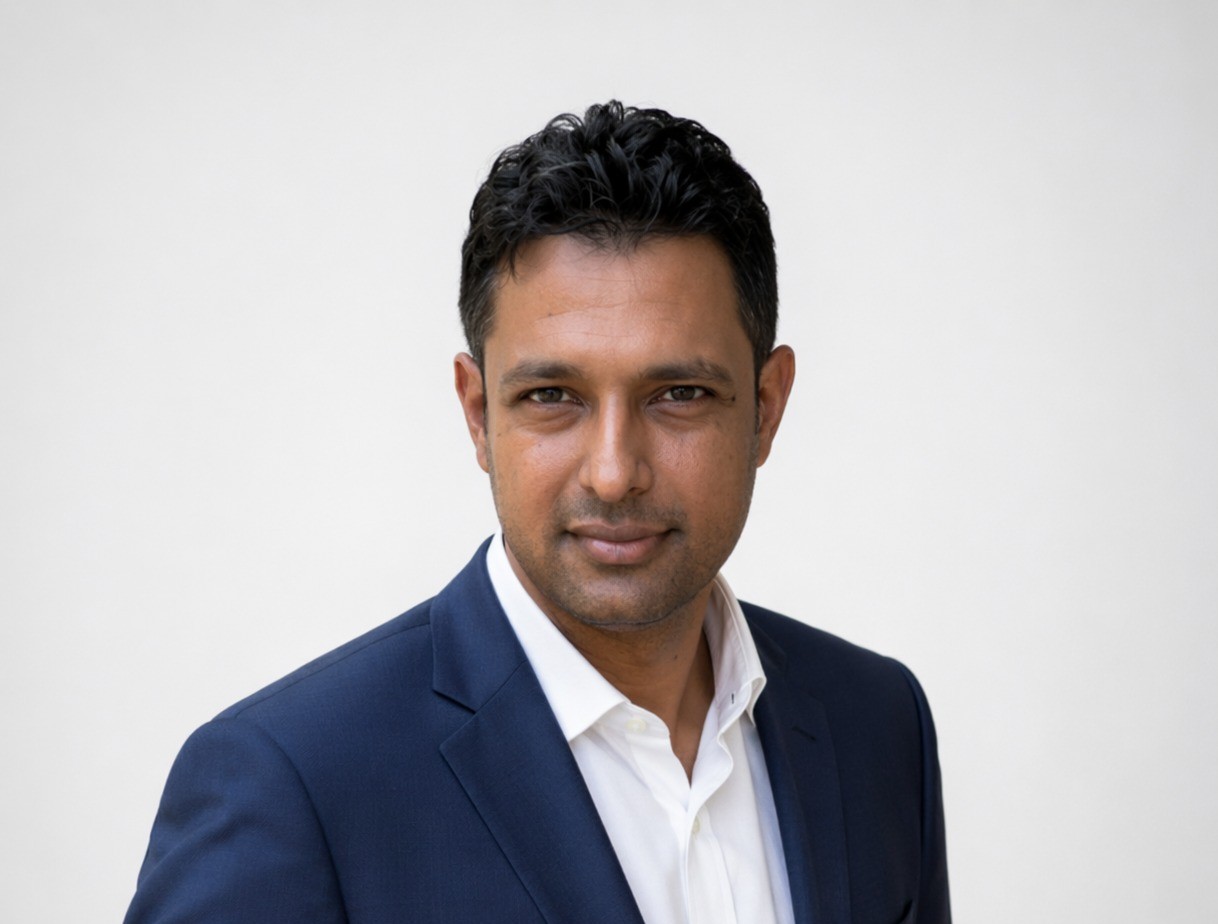
By: Prempreet Singh, Founder & CEO, SkillBytes
For the last two years, one question has hovered over every staffroom and every parenting WhatsApp group: will artificial intelligence take over the classroom? The honest answer is no. But the question itself is the wrong one. The more useful question is what AI’s job in education actually is today, because that job is clearer, humbler, and far more important than the replacement debate suggests.
Start with the students who have no teacher to replace
India has close to 25 crore school students across more than 14 lakh schools. For a very large share of them, the debate about AI versus teachers is theoretical, because the scarce resource was never technology. It was access to a good teacher at all. A student in a small town preparing for boards often has no coaching seat, no personal tutor, and no structured guidance beyond a textbook.
This is AI’s first job, and its most urgent one: be available where teachers cannot reach. Not as a novelty, but as standardised, pedagogically aligned learning delivered at a scale no human system can match. The technology finally makes it possible to give the student with the least the same structured daily practice as the student with the most.
Format decides whether that promise is real. At SkillBytes, we deliver structured, exam-focused learning entirely inside WhatsApp, because that is where students already are. More than 9,00,000 students learn this way today, generating tens of millions of learning interactions, with sessions running past 30 messages. Nothing to download, nothing to log into, no coaching fee to pay. When learning travels to the student instead of asking the student to travel to it, inclusivity stops being a slogan and becomes a distribution decision.
Where teachers are present, AI’s job changes
The second job is quieter. Every learning interaction generates data: where a class is struggling, which concepts refuse to stick, which student has silently fallen behind. Today, most of that signal is invisible to the people best placed to act on it.
The direction the whole sector is moving is to surface that signal to educators, in partnership rather than in competition. A teacher who can see, concretely, which of her students needs what is a teacher who can make sure no child slips through unnoticed. AI does the pattern recognition; the teacher does the teaching. That division of labour is not a diminished role for educators. It is a better-informed one, and it is where the most meaningful work between platforms and teachers will happen over the next few years.
What AI can honestly claim today, and what it cannot yet
There is a lot of loose talk in edtech about personalisation, so it is worth being precise. What AI does well today is deliver the right practice at enormous scale, give instant feedback while attention is still warm, and keep learning light enough to live inside a five-minute session. That part is real and running.
The next layer, where the experience adapts fully to each individual learner, curating what each student sees based on how they learn, is the direction the technology is heading, not a finished feature anyone should claim to have solved. Platforms that overclaim on AI will lose trust. The ones that are honest about today versus tomorrow will earn the durable engagement that actually matters.
Why teachers remain irreplaceable
None of this touches what teachers uniquely do. AI cannot read a confused face and change course mid-lesson. It cannot comfort a nervous student the night before an exam, or supply the encouragement that turns a struggling learner into a confident one. Motivation, empathy, and judgment stay firmly in the teacher’s domain, and no roadmap changes that.
The road ahead
AI’s role in education will keep evolving as the technology does. But its fundamental job, as I see it, is already clear. Reach the students no teacher can reach, with real pedagogy and personal attention at scale. And where teachers are present, put better information in their hands so every child gets caught before they fall behind. The story worth telling about 2026 is not machines replacing humans in classrooms. It is quality learning finally travelling to the students who were always left out, and teachers finally getting the support their work deserved all along.