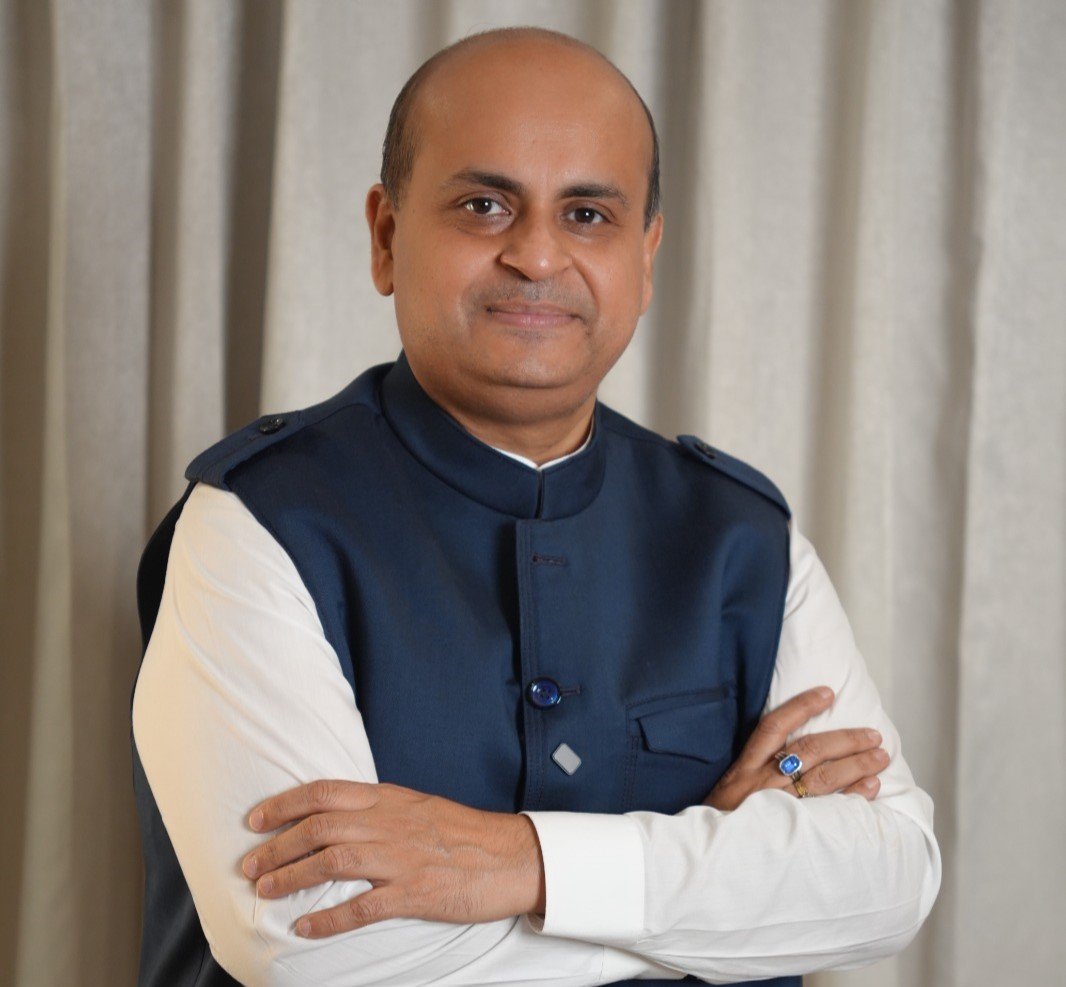
By: Shailendra Bhadauria, Chancellor of Pratap University in Jaipur (Rajasthan)
For many years, higher education has motivated students to take up a certain course and form their academic and career trajectories on its basis. Although specialisation is vital, it has to be noted that the reality of today’s world necessitates knowledge of a variety of disciplines. Among other things, it concerns such branches of knowledge as artificial intelligence and healthcare, business and sustainability, which means that the necessity of interdisciplinary education becomes obvious in today’s modern world.
Modern workplaces are changing dramatically. The rapid development of technology and the requirements of industries create a large number of professional roles that require much more than simply technical skills to get them done. Employers appreciate being able to hire people who can think critically and communicate effectively as well as use their knowledge in the best way possible.
Moving Beyond Traditional Academic Boundaries
Interdisciplinary education invites students to take a wider approach to their respective study areas, learning how various disciplines are related to each other. For example, an engineering student who studies business management can develop an understanding of entrepreneurship and product development. Similar to that, a management student who is exposed to data analysis, psychology or other technologies can carry out better decision-making.
This method is widely relevant in today’s world with an interconnected economy in which challenges seldom occur separately. To illustrate it further, creating a healthcare solution calls for medical knowledge, technological competence, financial planning skills, and understanding of human behaviour. Having these points of view enables students to view issues thoroughly while developing skills such as curiosity, independent thinking, and adaptability.
NEP 2020 and the Shift Towards Holistic Education
The significance of advancing towards a more comprehensive and multidisciplinary system of higher education has been acknowledged by India’s National Education Policy (NEP) of 2020. It emphasises flexible curricula, innovative combinations of courses to be pursued, a multidisciplinary approach towards research and the means for students to study the subjects of interest.
The UGC has amended NEP 2020 by introducing the Curriculum and Credit Framework for Undergraduate Programmes, according to which students are not only given a choice of subjects, but also provided with a multidisciplinary approach towards studies and flexibility of entry and exit points.
This change is very important for Indian higher education in general. The emphasis on education has changed from considering a degree as something narrowly defined to an emphasis on the formation of a well-rounded personality possessing academic knowledge and practical skills.
Nevertheless, merely introducing new subjects does not suffice to make this approach work. Universities must make it possible for students to use their knowledge through joint projects, research assignments, internships and experiential learning.
Preparing Students for Emerging Career Opportunities
Interdisciplinary education is gaining recognition because industries are starting to use more integrated approaches to solve problems and innovate. Workers who understand the links between their area of expertise and other fields are more likely to adjust successfully to the new demands of their profession.
For example, AI technologies require not only technical knowledge but also comprehension of ethics, law, business, and human behaviour to be effective. Finance specialists are in need of technological competence, while those who work in marketing must know about consumer psychology, analytics, and digital technologies.
Interdisciplinary studies can also lead to entrepreneurship since students who know their subject well, together with business, finance, communication, and market research, are more likely to find opportunities and create working solutions.
Interdisciplinary education does not aim to substitute specialisation. Instead, it seeks to combine a deep knowledge of one discipline with the knowledge of various surrounding areas.
The Role of Universities in Shaping Future-Ready Graduates
Universities have a significant responsibility in making interdisciplinary education accessible and relevant. This requires moving beyond conventional teaching methods towards learning environments that encourage exploration, collaboration and practical application.
Institutions can introduce elective courses across departments, interdisciplinary research projects, industry-led assignments and collaborative learning opportunities. Integrating technology, communication, entrepreneurship and critical thinking into academic programmes can further strengthen the learning experience.
At the same time, interdisciplinary learning must not compromise the depth of a student’s chosen specialisation. Students need strong subject knowledge alongside exposure to complementary disciplines. Maintaining this balance will make academic programmes more relevant without diluting their core purpose.
Building a More Adaptable Generation
The scope of higher education in India will be dependent not just on the number of graduates produced but also on how well the graduates possess the skills to think critically and adapt to unfamiliar situations.
Interdisciplinary learning makes it possible to broaden the skills of graduates beyond any single subject. As India moves forward to establish itself as a strong player in the global economy of knowledge, it will be necessary for Indian universities to train specialists for jobs and situations that do not exist yet.
Specialisation will be paramount in terms of professional skills; however, interdisciplinary learning will help the students discover the bigger picture. Therefore, the most successful graduates will be those who know their profession well, but are able to go beyond it.