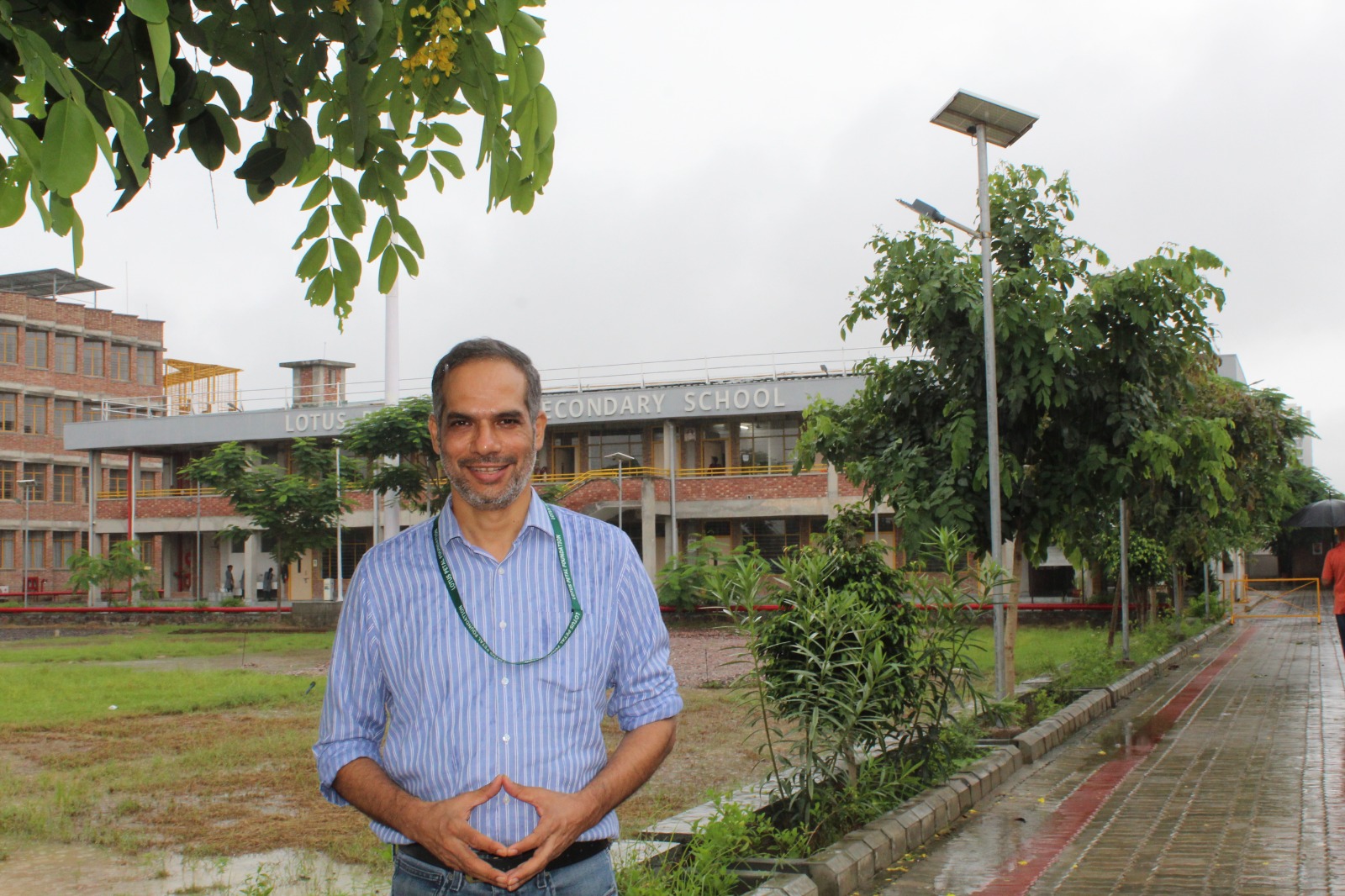
A simple yet powerful moment—seeing children walk barefoot on a cold winter morning—sparked Kushal Raj Chakravorty’s journey to create change. In 2011, he founded the Lotus Petal Foundation to bridge gaps in education, nutrition, and livelihood for underprivileged children. From six students in one classroom to thousands impacted across India, the Foundation today stands as a model of scalable, compassionate education. In this interview with Education Edge Global, Kushal shares his vision, milestones, and the power of purpose-driven innovation in transforming young lives.
What inspired you to start Lotus Petal Foundation back in 2011, and how has your vision evolved since then?
It started with a moment that stayed with me forever. On a cold winter morning, I saw children walking barefoot while I dropped my own kids at the bus stop. That image of inequality pushed me to act. We began with six children in a single classroom. Today, Lotus Petal combines education, nutrition, and livelihood programs, reaching thousands. The vision has grown from helping a few children to creating scalable models like Pratishthan Learning Center, Vidya Sahyog, and the upcoming Senior Secondary School, designed to impact lakhs of lives.
How has your personal background and experiences shaped your philosophy toward education and empowerment?
I have an engineering degree from BIT Mesra and an MBA from IIM Lucknow. My 20-year corporate career, including roles at IKEA, taught me strategy, scalability, and structure. But my spiritual journey has been equally transformative. Reading Autobiography of a Yogi by Paramahansa Yogananda taught me discipline, humility, and purpose-driven work. Meditation and yoga keep me grounded. These experiences shaped my belief that lasting social impact comes from combining business rigor with empathy and compassion.
Could you walk us through the five education programs under the foundation and how each addresses a specific gap in the system?
● Lotus Petal Senior Secondary School: CBSE-affiliated school providing quality education, nutrition, wellness and skill building to underserved students.
● Pratishthan Learning Centre: Accelerated fast-track learning for children who are behind in school, completing Class 12 in five years. Recognized by the DL Shah Quality Award 2022.
● Vidya Sahyog: Live digital teaching in 16 states, supporting government schools with access and quality.
● Scholarship Program: Financial aid and mentorship to enable higher education.
● Aarogya Wellness Program: Physical and mental wellness support for optimal learning.
Together, these programs bridge gaps in access, continuity, quality, affordability, and holistic development.
The upcoming Lotus Petal Senior Secondary School aims to serve more than 10,000 students. What makes this initiative different from other large-scale educational projects?
It’s a model ecosystem specifically designed to provide holistic support and development to underserved students. Spread across a 5-acre eco-conscious campus, it integrates academics, skill-building, nutrition, and wellness. The focus is on preparing our students for life and livelihood, not just exams. Designed for scale and sustainability, it aligns with SDGs and creates a blueprint for future-ready education.
The Vidya Sahyog Program is extending digital classrooms to government schools across states. How do you ensure access, quality, and engagement in such a model?
We focus on two-way live teaching, not recorded lessons. Teachers are trained, classrooms monitored, and engagement tracked. Over 90,000 hours of teaching have reached 275 schools. The model ensures students not only access education but actively participate in it.
Vocational training and livelihood creation are core to your mission. Could you share some success stories?
Through our NSDC-certified Jeevika program, over 2,700 youth have been trained in digital marketing, BFSI, hospitality, hardware, and retail. Many have secured stable jobs, breaking cycles of poverty. One student now works with a multinational in digital marketing—proof that skills directly create opportunity and dignity.
From six children in a classroom to over 6,500 reached digitally, what does this journey mean to you personally?
It’s deeply personal. Numbers matter, but the real measure is transformed lives. Seeing Dr. Saloni Raj, who once had limited access, become a doctor, is inspiring. Every success reaffirms why Lotus Petal exists. Growing from a single room to thousands of children shows what vision, persistence, and empathy can achieve.
In your view, what are the biggest systemic challenges in India’s education landscape, and how can innovative models help bridge these gaps?
Unequal access, high dropout rates, and the disconnect between education and employability are major challenges. Accelerated learning, digital classrooms, and skills aligned with industry demand can bridge these gaps. Holistic models that combine education with wellness and life skills are key to long-term impact.
With rapid digitalization in education, how do you balance technology with human connection?
Technology enables scale, but it cannot replace human connection. At Lotus Petal, we pair digital learning with mentorship, counseling, and wellness programs. Students receive emotional support while benefiting from adaptive, technology-driven education.
Where do you see the foundation in the next decade, and what milestones are you working towards?
The next decade is about scale with sustainability. We aim to empower 100,000 students through technology-driven programs and expand skilling and livelihood initiatives. Lotus Petal will continue to thrive independently of any single leader, guided by strong systems, partnerships, and a culture of excellence.