
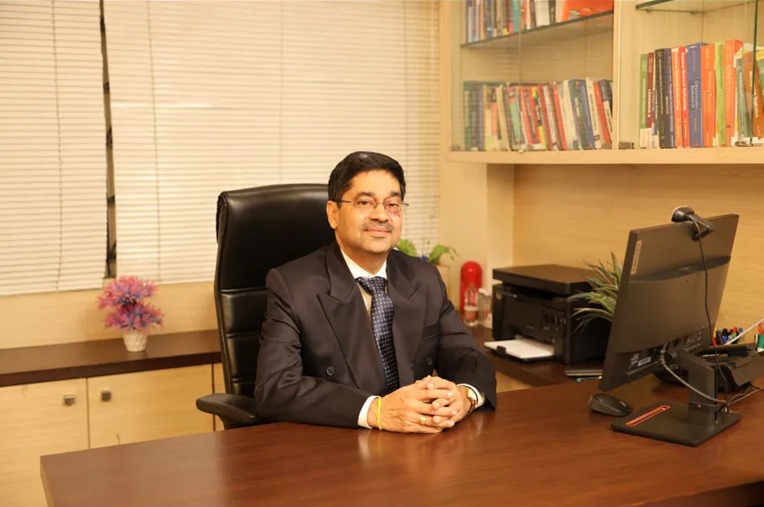
By: Vikrant Joshi , Principal, Vivekanand Education Society, College of Polytechnic
Artificial Intelligence is reshaping the way industries work. Every conversation about AI and engineering education seems to begin with the same anxious question: Which jobs will AI replace? For diploma engineering, that is the wrong question. The better one is: What kind of engineer can AI not replace? The answer lies not in someone who can simply write code, but in the engineer who can step onto a shop floor, diagnose a fault, adapt to an unexpected problem, and get a production line running again. That has always been the strength of diploma engineers, and in the AI era, it is becoming even more valuable.
As India accelerates initiatives such as Make in India, Digital India, and the growth of Industry 4.0, industries need professionals who can turn advanced technology into practical solutions. While much of the AI conversation focuses on software developers and data scientists, there is another workforce that remains equally critical, the engineers who install, operate, maintain, and optimise these intelligent systems on the ground. This is where diploma engineering stands out. With its strong emphasis on technical skills, hands-on training, and industry exposure, diploma education prepares students to contribute from day one.
AI is Changing Engineering, Not Replacing It
Artificial Intelligence is transforming engineering, not replacing engineers. In fact, it is changing what industries value. AI can generate reports, analyse data, automate repetitive tasks, and even assist with design. What it cannot easily replicate is practical judgment, hands-on troubleshooting, or the ability to solve real-world problems where conditions rarely match the textbook.
For years, diploma engineering was often viewed as the more practical alternative to a four-year engineering degree. Today, that practical foundation is becoming one of its greatest strengths. As industries adopt AI-powered automation, engineering roles are evolving rather than disappearing. Engineers are increasingly expected to work alongside intelligent systems, interpret machine data, troubleshoot complex equipment, and optimise production processes. Success depends not just on technical knowledge, but on adaptability, critical thinking, and the confidence to solve problems under real-world conditions.
This is where diploma engineers have a distinct advantage. Their education is built around practical learning, giving them early exposure to machines, production systems, industrial equipment, and field challenges. Whether it is installing automated equipment, maintaining AI-enabled systems, identifying faults, or ensuring uninterrupted operations, diploma engineers bridge the gap between advanced technology and its successful implementation on the ground. In the age of AI, that ability is becoming indispensable rather than replaceable.
Building Industry-Ready Skills Through Practical Learning
One of the biggest strengths of diploma education is its practical approach. This hands-on exposure builds confidence and develops the ability to solve problems under real-world conditions. Students learn how to work with equipment, understand industrial processes, follow safety standards, and respond to real operational challenges experiences that cannot be gained through textbooks alone.
Employers value graduates who can quickly adapt to workplace requirements, work in teams, communicate effectively, and continuously learn as technology evolves. In today’s rapidly changing industrial landscape, these qualities are just as important as technical knowledge. By combining classroom learning with practical experience, diploma education creates professionals who are ready to contribute from day one and continue growing as industries embrace newer technologies.
Preparing diploma engineers for the AI era requires stronger partnerships between institutions and industry. Internships, expert sessions, collaborative projects, innovation labs, and skill-based certifications help bridge the gap between classroom learning and industry, ensuring students graduate with an understanding of current industry expectations rather than outdated practices.
Teaching AI the Right Way in Diploma Education
AI must be taught in a way that is actually useful, not just added as another subject. A single “Fundamentals of AI” elective may look good on paper, but it won’t prepare students for real industrial challenges. The better approach is to embed AI into practical learning itself using predictive maintenance dashboards in mechanical labs, computer vision for quality inspection in production engineering, and anomaly detection in Electrical and Automation & Robotics courses. The goal is not to turn diploma students into data scientists, but to make them capable of operating, maintaining, and troubleshooting AI-enabled systems in the workplace.
Achieving this also requires rethinking the role of faculty. Today’s educators must do more than deliver lectures. They need to encourage critical thinking, problem-solving, and the responsible use of AI as a learning tool rather than a shortcut. For this to happen, faculty members must also continue upgrading their own skills. Regular industry exposure, professional development programmes, and hands-on experience with emerging technologies are just as important as modernising laboratories. When educators stay connected with industry, they are better equipped to prepare students for the realities of modern engineering careers.
Why Diploma Engineers Will Drive India’s Industrial Growth
India’s ambition to become a global leader in manufacturing, infrastructure, electronics, mobility, and advanced technologies cannot be achieved through innovation alone. It requires a strong workforce that can bring these innovations to life. Diploma engineers form the backbone of this workforce. What makes diploma engineers special is rooted in their practical application, giving industry professionals who are ready to work with machines, production processes, quality systems, and modern engineering tools. As businesses adopt newer technologies, these engineers become the crucial link between technology, operations, and execution, ensuring that innovation delivers real results on the ground.
As India’s industrial landscape continues to evolve, the importance of diploma engineering will only grow. Strengthening diploma institutions through industry collaboration, modern infrastructure, and future-focused curriculum will not only improve employability but also create the skilled technical workforce needed to support the country’s long-term economic growth. Investing in diploma engineers is, therefore, an investment in India’s ability to build, manufacture, innovate, and compete on the global stage.
Conclusion
Diploma engineering institutions have an increasingly important responsibility to prepare graduates who can confidently work with intelligent technologies, adapt to rapidly changing industries, and solve practical challenges on the ground.
India’s future competitiveness will depend not only on how much AI it develops, but on how effectively it builds a workforce capable of implementing, maintaining, and improving these technologies at scale. The focus must be on creating engineers who are technically skilled, adaptable, and industry-ready. By strengthening diploma education through modern infrastructure, industry collaboration, and experiential learning, India can build the workforce needed to drive sustainable industrial growth and remain globally competitive.