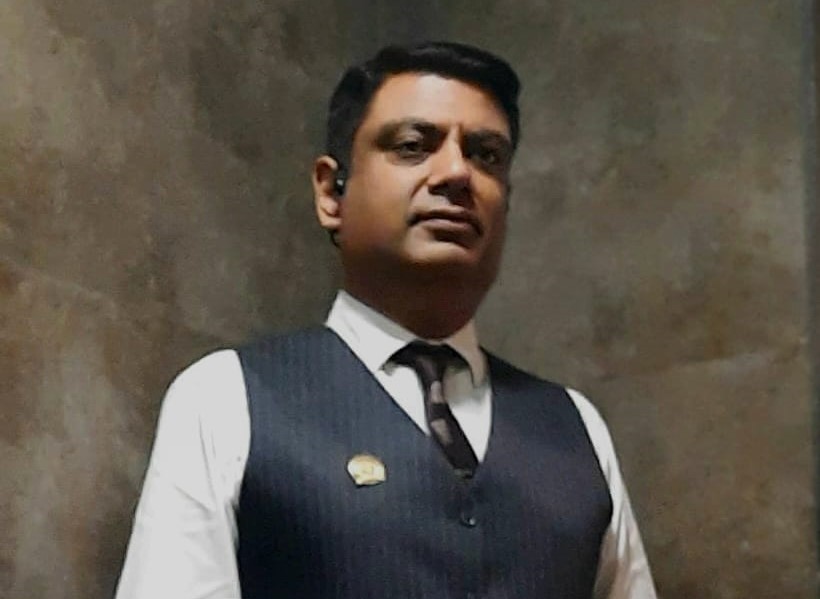

With a six-decade legacy of shaping India’s education landscape, the MBD Group has long been synonymous with innovation, inclusivity, and excellence in learning. Carrying forward this legacy into the digital era is Monica Malhotra Kandhari, Managing Director of AASOKA by MBD Group—a next-generation learning ecosystem that blends traditional pedagogy with cutting-edge technology. In an exclusive interaction with Education Edge Global, Monica Malhotra Kandhari shares the inspiration behind AASOKA’s inception, its alignment with the National Education Policy (NEP) 2020, and how it is redefining classroom learning through personalization, accessibility, and teacher empowerment.
The MBD Group carries a six-decade legacy in education. What inspired the launch of AASOKA, and how does it carry forward that legacy while embracing new-age technology?
The MBD Group’s six-decade legacy in education is rooted in the vision of Shri Ashok Kumar Malhotra, whose belief in the transformative power of education continues to guide us. AASOKA was launched as a tribute to this vision, carrying forward the Group’s commitment to making quality education accessible to all, while embracing the opportunities offered by new-age technology.
The idea behind AASOKA was born during the challenging days of the COVID-19 pandemic, when schools across the country were suddenly forced to shut down. With students and teachers struggling to maintain continuity in learning, many schools, especially in smaller towns, lacked the resources to transition online. Witnessing this, MBD Group stepped in by offering free access to its e-books and digital resources via its Learning Management System (LMS). This initiative made a significant impact, highlighting the need for an easy-to-use, affordable digital platform capable of personalizing learning for each student.
AASOKA was created to fulfil that need. AASOKA is designed as a complete learning ecosystem that goes beyond being just a content provider or tech platform. It offers a one-stop, intuitive solution for schools, providing vast academic resources, interactive learning tools, and AI-enabled assessments that support teachers, students, and school leaders. What sets AASOKA apart is its ability to be fully customized to each school’s unique needs, ensuring meaningful, tailored learning experiences for every learner.
Our approach is grounded in listening to educators on the ground and addressing challenges such as learning gaps, classroom engagement, and operational efficiency. As we expand into more regions and invest in innovation and strategic partnerships, our goal is not only to broaden our reach but to create tangible, impactful outcomes for students, teachers, and schools.
In essence, AASOKA honors the MBD Group’s legacy of inclusive education while leveraging technology and innovation to make learning more accessible, engaging, and future-ready for every student.
What key gap in India’s K-12 learning ecosystem did you aim to address with AASOKA’s integrated blended model?
The key gap in India’s K-12 learning ecosystem lies in the lack of a holistic, personalized approach that integrates academic learning with skill development, co-curricular engagement, and real-time insights into each student’s progress. Traditional classroom teaching and other platforms often follow a one-size-fits-all model, which can leave students with varying competencies and learning styles underserved.
With AASOKA’s integrated blended model, we aim to bridge this gap by providing a complete learning ecosystem that combines interactive, multimedia-rich content with adaptive assessments and detailed analytics. Our approach incorporates the VAK (Visual, Auditory, Kinesthetic) learning model, addressing the different ways students learn and ensuring that lessons are engaging and effective for every learner. This model, combined with personalized pathways, allows students to strengthen their areas of improvement while fostering critical thinking, creativity, and collaboration.
How do you view the growing importance of technology-enabled learning in India, especially after the pandemic’s digital acceleration?
The pandemic has significantly accelerated the adoption of technology in education, demonstrating the critical role of digital learning solutions in ensuring continuity, accessibility, and personalized learning. Technology-enabled learning allows students to study at their own pace, access multimedia-rich content, and engage in interactive experiences, while empowering teachers to create dynamic and effective classrooms. It also helps bridge gaps in access and quality, particularly in regions where traditional resources may be limited.
What truly sets AASOKA apart is its holistic, human-centered approach to digital education. It is not just a platform but a comprehensive learning ecosystem that integrates adaptive learning, technology-driven tools, and personalised support to deliver an enriching educational experience. The platform features AI-powered tools such as AI Quizzes, AI Question Generator, and Student Growth Prediction, enabling teachers to assess learning outcomes more effectively and provide targeted interventions based on individual performance.
Aligned with NEP 2020, NCF-FS, and NCF-SE frameworks, AASOKA supports multiple boards including CBSE, ICSE, and state boards. With features like a comprehensive question bank and offline content access, AASOKA ensures that no child is left behind. Beyond content delivery, it focuses on experiential learning, personalized assessments, and data-driven analytics that track student progress—helping educators identify strengths and areas for improvement
Beyond content delivery, AASOKA focuses on experiential learning, personalized assessments, and analytics that track student progress, enabling teachers and schools to identify strengths and areas for improvement. By combining traditional learning methods with technology-driven innovation, AASOKA enhances engagement, deepens understanding, and prepares students with the knowledge and skills needed to thrive in the 21st century.
AASOKA aligns with the NEP 2020 and the National Curriculum Framework. Can you share specific examples of how these policies shaped your curriculum design?
AASOKA’s curriculum is thoughtfully aligned with NEP 2020 and the National Curriculum Framework (NCF), ensuring learning is interactive, engaging, and holistic. While designed for diverse school systems including private and international institutions, it maintains strong integration with national guidelines that promote academic excellence and essential life skills.
We integrate Indian educational philosophies with modern frameworks, such as Pramanas and Panchakosha Vikas mapped with Panchadi principles, along with 21st Century Skills and the United Nations Sustainable Development Goals (SDGs). This creates a future-ready and values-based learning foundation.
Our pedagogy is further strengthened by the application of Bloom’s Taxonomy (BT) levels, which guide the systematic development of cognitive skills. This approach empowers learners to think critically, solve problems creatively, and adapt effectively to an evolving world.
Some specific examples of how these policies shaped our curriculum include
Experiential & Project-Based Learning: Students participate in real-world projects and activities that build critical thinking, problem-solving, and collaboration skills, reflecting NEP 2020’s emphasis on hands-on, inquiry-driven learning.
Competency-Based Assessments: Assessments are designed to measure higher-order thinking and practical application rather than rote memorization, in line with NEP and NCF’s focus on learning outcomes and competencies.
Multi-subject integrated Curriculum: AASOKA’s curriculum is designed for flexibility and meaningful multi-subject integration. Students are not limited to learning subjects in isolation. Concepts from Mathematics, Science, English, Social Science, Arts, and more are connected through activities and projects that build deeper understanding and real-world application.
Flexible: Flexibility comes with the option to learn anytime and anywhere. Schools can deliver lessons using online modules, physical books, and offline access to digital resources, making it ideal even for remote areas or classrooms with limited internet connectivity. This ensures every learner continues progressing, whether at home or at school, with content that adapts to varied learning environments and student needs.
Foundational Literacy and Numeracy (FLN): Early learning modules and theme-based kits build strong foundational skills in language and mathematics, aligned with NEP priorities. These include play based methodologies and a unique coding program that helps build skills like logical thinking, sequencing, and problem-solving in a playful, age-appropriate way—making technology accessible right from the start.
Technology-Enhanced Learning: Digital content, adaptive assessments, progress tracking, and multimedia modules enhance engagement and personalisation, supporting NEP’s emphasis on integrating technology in education.
Through these incorporations, AASOKA ensures that its curriculum is aligned with national education policies while preparing students to be future-ready, well-rounded learners.
With technology at the core, how does AASOKA ensure that the essential human connection between teacher and student remains strong?
At AASOKA, while technology is at the core of our platform, maintaining a strong human connection between teachers and students is central to our approach. Our digital classroom solutions empower teachers with tools for immersive learning, engagement, and classroom management, while keeping student needs at the forefront.
We combine NEP 2020 and NCF-aligned lesson plans, multimedia resources, experiential learning modules, and AI-driven analytics to provide real-time visibility into student progress. Teachers can quickly identify students who need additional support, track submissions, address doubts, and personalize learning pathways, ensuring that technology enhances — rather than replaces — the human touch.
AASOKA also emphasizes teacher empowerment through structured Continuous Professional Development (CPD) sessions and expert-led training sessions. So far, we have trained more than 80,000 teachers, equipping them with digital teaching competencies and practical strategies to enhance classroom outcomes. By turning daily classroom activities into actionable insights, we support data-driven instruction that strengthens teacher-student interactions.
In essence, AASOKA integrates technology and pedagogy to create a holistic learning ecosystem where students receive advanced, outcome-based education, and teachers remain fully connected, informed, and equipped to guide every learner effectively.
You emphasize accessibility and affordability. How does AASOKA keep high-quality education within reach for schools and parents across diverse socio-economic backgrounds?
At AASOKA, accessibility and affordability are central to our mission. We design our programs to ensure that high-quality education reaches students and schools across all socio-economic backgrounds, including those in remote areas or budget schools. Our platform offers NEP-aligned curriculum, multimedia resources, experiential learning modules, and digital classroom solutions that can be accessed both online and offline, reducing dependence on expensive infrastructure.
To keep education affordable, we provide flexible pricing models for schools and parents, ensuring that cost is never a barrier to quality learning. Additionally, we support teachers through structured professional development programs, enabling educators to continuously enhance their teaching skills without any extra financial burden.
So far, AASOKA has reached over 9.5 lakh students and 4,000+ schools across urban, semi-urban, and rural regions of India, reflecting its strong geographical accessibility and inclusive approach. This growing footprint reflects our belief that when technology, affordability, and teacher empowerment come together, quality education becomes not just accessible, but transformative for every child.
By combining scalable digital solutions, affordable access, and robust teacher support, AASOKA ensures that every learner, regardless of their socio-economic context, can benefit from meaningful, engaging, and future-ready education.
What is your long-term vision for AASOKA’s role in shaping India’s education landscape over the next decade?
Our long-term vision for AASOKA is to play a transformative role in shaping India’s education landscape over the next decade. We aim to create a holistic, future-ready learning ecosystem that empowers students, educators, and schools across diverse socio-economic and geographic contexts.
In the near term, we are targeting to partner with 20,000 schools over the next three years, ensuring that our NEP-aligned, experiential, and technology-enabled programs reach learners nationwide. Beyond India, AASOKA is also beginning to expand internationally, with footprints in regions such as the Middle East and South Africa, reinforcing our commitment to making high-quality education accessible globally.
At MBD Group, our integrated vision is to empower lives in classrooms, in guest experiences, and in everyday interactions through purpose-driven progress. For AASOKA, this means enabling every child to dream big, providing the tools and guidance to unlock their potential, and fostering a generation of learners who are confident, capable, and ready to thrive in a rapidly evolving world.