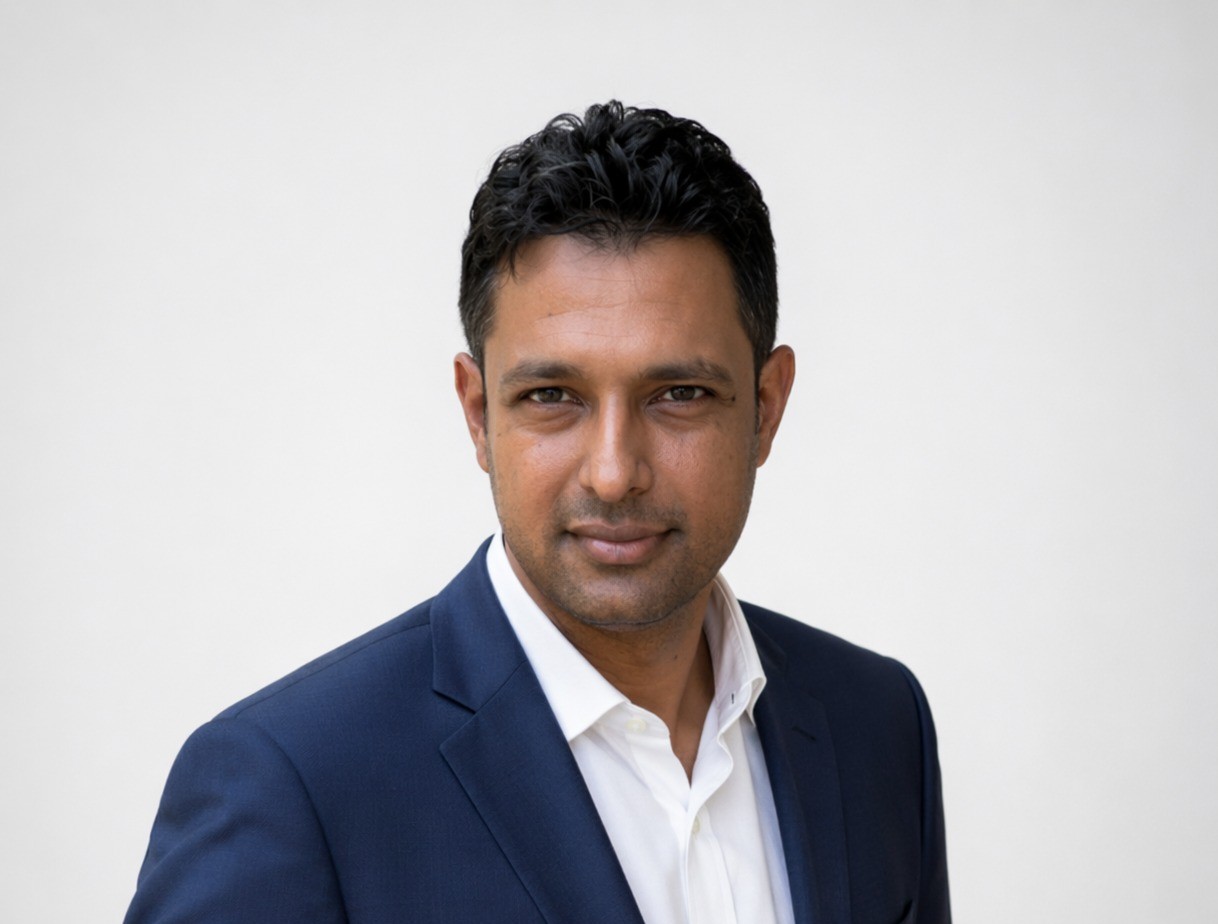

By: Ravi Prakash, Founder & CEO, Rodha
Every few months, a familiar debate resurfaces in education circles: will AI eventually replace teachers? Having spent the last several years building Rodha around faculty, mentorship, and student outcomes, my answer is no – but I’d add an important caveat. AI is going to change what a good teacher needs to be, and it’s going to raise the bar on what students expect from one. The institutions that treat this as a threat will struggle. The ones that treat it as a tool to be built around good teaching, rather than a replacement for it, will end up serving students far better than either AI or teachers could alone.
The Real Problem Isn’t a Shortage of Content Anymore
For most of the history of exam preparation in India, the constraint was access – to good faculty, good material, good practice questions. That constraint has effectively disappeared. Any student today can access an almost unlimited volume of lectures, explanations, practice questions, and solved examples on the internet, much of it for free, and increasingly, much of it AI-generated on demand.
This sounds like good news, and in some ways it is. But it has quietly created a different, harder problem: students now have too much content and too little time to know what to do with it. A CAT aspirant, for instance, has a fixed number of preparation hours before the exam. The internet offers an effectively unlimited amount of material to fill those hours with. The real skill a student needs today isn’t finding an explanation – it’s knowing what to study, what to skip, in what sequence, and how to use limited hours efficiently. That is a judgement problem, not a content problem, and it’s exactly where good teaching becomes more valuable, not less.
This is the belief Rodha was built on from the start: that a strong faculty alone doesn’t make a complete academic product. Good teaching needs to be backed by structured practice, mocks, doubt support, and mentorship – a system, not just a classroom. I’ve made it a habit to speak directly with students to understand where their preparation is actually falling short, and we carry that habit into every new exam category we enter, from CAT to OMETs to CLAT to IPMAT to SSC.
What AI Actually Does Well
I don’t think it’s useful to pretend AI isn’t a genuinely powerful tool for learning, because it clearly is. Unlike a faculty member juggling a room of forty students, AI doesn’t lose patience after explaining a concept for the fifth time. A student stuck on one type of problem can ask it to generate three or five similar practice questions on the spot and get immediate additional practice, at their own pace, without waiting for the next class or the next doubt-clearing session.
We use AI in our own workflow too – for things like converting handwritten notes into structured content, or speeding up how quickly our teams can produce material for a new batch or category. There’s no reason students shouldn’t get the same kind of practical leverage from it in their own preparation. It’s part of why we built Rodha Skill House, our division focused on business-readiness and applied-AI training, covering tools like ChatGPT, Claude, Gemini, and NotebookLM alongside skills like Excel and communication.
What AI Still Can’t Do
Where I think the “AI will replace teachers” argument breaks down is in mistaking information delivery for education. AI can answer a question extremely well. It’s far less equipped to know which question a specific student should be asking in the first place, or where that student’s actual gap is versus where they think it is.
A good teacher does something AI still can’t reliably replicate: they observe a student over weeks and months, notice patterns in errors that the student themselves hasn’t spotted, and adjust the plan accordingly. They read whether a student’s real problem is conceptual, or whether it’s confidence, or time-management, or simply anxiety walking into a mock exam. None of that comes from a single prompt-response exchange. It comes from sustained, human attention – the kind of mentorship that has always been the harder-to-scale part of education, and precisely the part AI is worst positioned to replace.
Building the Two Together, Not Choosing Between Them
At Rodha, this is the principle we’ve tried to design around rather than argue about in the abstract. Our doubt-resolution system, Rodha Buddy, lets students submit questions through text, images, or audio, and tracks pending and unresolved doubts so a query doesn’t simply disappear into a chat group the way it often does elsewhere – but it’s built to connect students to subject mentors, not to replace them with a bot.
Our GDPI platform, which supports MBA candidates through interview and SOP preparation, combines an AI coach for practice with human mentorship from mentors at top B-schools, because we’ve found that interview readiness needs both – the volume and availability of an AI system, and the judgement of someone who has actually sat across the table in that specific interview room.
The pattern across both is the same: AI expands access, availability, and practice volume. Human mentors provide judgement, personalisation, and the kind of course-correction that comes only from paying close attention to an individual student over time. Neither substitutes for the other; each makes the other more useful.
What This Means Going Forward
My honest expectation is that AI will keep raising the standard students hold their teachers to. A student who can get an infinitely patient, always-available explanation from an AI tool has less tolerance for a rushed or repetitive classroom explanation. That’s a reasonable expectation, and educators – including us – need to keep improving in response to it, not resist it.
But raising the standard for teaching is different from eliminating the need for it. The deeper challenges in exam preparation – deciding what to prioritise with limited time, staying motivated through months of preparation, developing genuine problem-solving judgement rather than memorised patterns – are fundamentally human challenges. AI can support a student through all of them. It’s a poor substitute for someone who is actually paying attention to who that student is.
This is also why I’d caution institutions against treating AI adoption as a cost-cutting exercise dressed up as innovation. The temptation, especially for organisations under investor pressure to grow quickly, will be to use AI to reduce faculty headcount rather than to make faculty more effective. We’ve deliberately taken the opposite approach, choosing depth over rapid scale as we grow – adding one to two new categories a year rather than spreading thin across many at once. The real opportunity with AI is the same: it should free faculty and mentors from repetitive explanation and content creation so they can spend more time on the things only they can do – reading a student’s specific gaps, adjusting a plan, and staying invested in their progress over months.
The future of education isn’t AI versus teachers. It’s AI in service of better teaching – and the institutions that build it that way will be the ones students trust with something as important as their preparation.