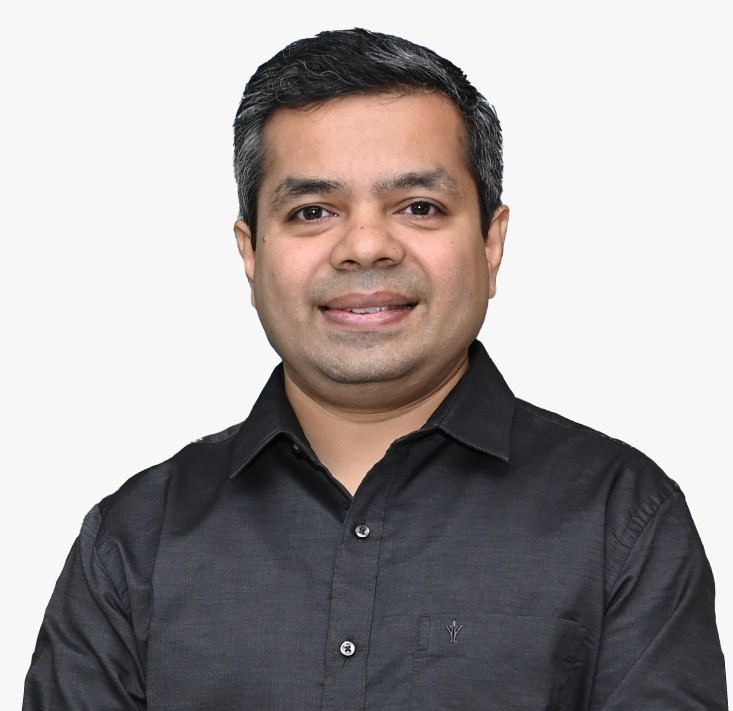

By: Aditi Misra, Director, Dharav High School Gurugram
India’s education system has long been associated with rote learning—a method where memorization of facts and formulas takes precedence over understanding, creativity, and application. While this approach helps students perform well in exams, it often leaves them ill-equipped to tackle real-world problems, think critically, or innovate. As India aspires to become a knowledge-driven economy, the urgent question is: Is the education system prepared to transition from rote learning to critical thinking?
The Challenge of Rote Learning
Historically, Indian classrooms have emphasized the quantity of content over quality of understanding. Students spend hours memorizing chapters, dates, and formulas to excel in board exams or competitive tests. While this guarantees academic scores, it limits analytical reasoning, problem-solving abilities, and curiosity. Moreover, a rote-focused system discourages questioning, debate, and exploration—skills essential for thriving in a rapidly evolving world. This approach also fosters a fear of mistakes, making students hesitant to experiment or innovate.
The Promise of Policy Reforms
The National Education Policy (NEP) 2020 has recognized these shortcomings and aims to transform India’s education landscape. NEP emphasizes experiential learning, inquiry-based education, and multidisciplinary approaches. Classrooms are envisioned as spaces where students not only acquire knowledge but also analyze, question, and apply concepts creatively. Teacher training programs are being redesigned to shift from purely instructional methods to facilitation and mentorship. Digital tools, project-based learning, and collaborative assignments are gradually being integrated into schools, giving students opportunities to solve real-world problems rather than simply memorize solutions.
Implementation Challenges
Despite these policy initiatives, practical implementation remains a significant hurdle. Many classrooms are overcrowded, and teachers face pressure to complete the syllabus on time, leaving little room for interactive or student-centered learning. Assessment methods continue to prioritize memorization and marks over understanding and reasoning. Parents, accustomed to traditional success metrics, often encourage exam-focused learning, inadvertently reinforcing the culture of rote memorization. Additionally, infrastructural limitations in rural and semi-urban schools make experiential learning and modern pedagogical methods difficult to implement.
The Road Ahead
To foster a generation of critical thinkers, systemic changes are necessary. Curriculum redesign, teacher capacity building, and assessment reforms must work together with a societal shift in mindset. Examinations should reward reasoning, creativity, and application rather than memory alone. Schools must nurture curiosity, resilience, and a willingness to experiment, allowing students to learn from failure rather than fear it. Collaboration between policymakers, educators, parents, and students is essential to create an ecosystem where critical thinking is not an exception but the norm.
The transition from rote learning to critical thinking is not just an academic adjustment—it is a cultural transformation. India has immense potential to cultivate innovation, analytical reasoning, and problem-solving skills, but realizing this vision requires a concerted effort at multiple levels. While the NEP 2020 lays the groundwork, the success of this transition depends on its translation into classrooms, societal mindset, and assessment systems. India’s education system can be ready for critical thinking, but only if all stakeholders embrace the challenge and work collectively to foster an environment that values understanding, creativity, and innovation over memorization.