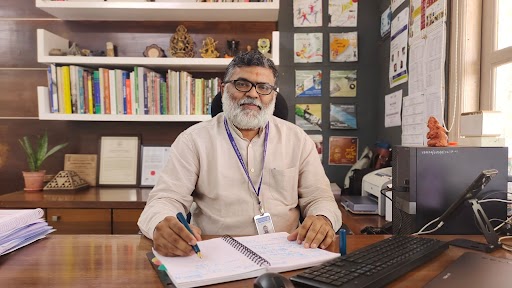

In a world where students navigate academic pressure, emotional challenges, and rapidly changing social environments, the role of a student counsellor has become more vital than ever. Sanjay Jadhav, Editor, Education Edge Global sits down with Mansi Sawant, an international athlete-turned-counselling psychologist whose inspiring journey blends sportsmanship, empathy, and a deep commitment to student wellbeing. From representing India at the Asian Championship to guiding young minds through life’s complexities, Mansi brings a unique perspective shaped by discipline, resilience, and heartfelt compassion. In this conversation, she opens up about her path into counselling, the evolving needs of students, and the powerful impact of creating safe emotional spaces for children.
Could you tell us about your journey into the field of student counselling? What inspired you to choose this profession?
My name is Mansi Sawant, and my journey has been a unique blend of sports and psychology.
I am an International Athlete, having represented India at the Asian Championship in China (2018), and I am also a National Gold Medalist in Kayaking. While I initially aspired to pursue sports psychology, life led me toward Counselling Psychology, and I went on to complete my Master’s degree in this field.
It was actually my mother who first introduced me to psychology, and my entire family has always been my biggest support system—whether in sports or academics.
I began my career as a Counselling Psychologist at Aller Cure Clinic in Pune, working under Dr. Sachin Gandhi and Dr. Bella Gandhi. My time there laid a strong foundation and taught me the value of patience, empathy, and understanding human behaviour deeply.
In your experience, how has the role of a student counsellor evolved over the years?
Over time, the role of a student counsellor has shifted from being a “problem-solver” to becoming a proactive supporter of overall development.
Today, counsellors are integrated into the school environment, which itself is a major advantage. Students are now more aware of mental health, mindfulness, and emotional wellbeing. With increasing early detection of concerns like ADHD, ASD, speech delays, SLD, screen-time issues, and behavioural challenges, counsellors play a key role in early identification and intervention—making a huge difference in a child’s development.
Instead of being called only in emergencies, counsellors now contribute to regular student growth, classroom functioning, social skills, coping skills, emotional literacy, and creating safe spaces for expression.
Many parents and students still see counselling as something needed only in crisis. How do you address this misconception?
Many parents believe that counselling is only for “major problems.”
But they are not to be blamed—awareness about mental health is still growing.
So, when such misconceptions arise, we focus on sensitising the child and the parent. We explain that counselling is not about labelling or judging; it is about understanding and improving one’s wellbeing, just like visiting a doctor for physical health.
We explain how counselling helps with everyday concerns such as:
Poor attention span
Low self-confidence
Screen-time management
Time management
Difficulty in decision-making
Communication gaps
Exam pressure
Peer pressure
Teenage/pubertal confusions
Developing interest toward the opposite gender and handling it mindfully
Social skills and relationship building
These may look small to adults, but they feel very big to a child. Counsellors provide a safe, non-judgmental space to talk—something peers of the same age cannot always offer.
Parents must understand that seeking counselling does not mean something is wrong with their child—it simply means they are supporting their emotional and mental growth.
Apart from academics, what are the other key areas where student counselling plays a vital role?
Beyond academics, counselling supports areas such as:
Stress management
Suicidal thoughts or emotional distress
Loneliness and withdrawal
Anger management
Relationship issues
Behavioural challenges
Coping with change
Communication and social skills
Building empathy
Strengthening parent–child relationships
As counsellors, we focus on the overall personality, not just academic performance.
What are some of the most common issues students approach you with?
The most common concerns I see are:
Difficulty making or maintaining friendships
Stress due to school, homework, and packed schedules
Communication gaps with parents
Emotional overwhelm or pressure
Attention and concentration difficulties
These concerns may seem simple from the outside, but they carry a lot of emotional weight for a child.
How do you approach situations where a student is reluctant to open up?
Rapport-building is the first and most important step.
I give the child time and space, reassuring them that:
This is a safe and judgment-free environment
Nothing they say will be used against them
They are not here to be blamed or corrected
Their feelings are valid and respected
I use art activities and interactive conversations to help children express themselves without feeling pressured. Once they feel understood, the wall slowly breaks.
How do you balance guiding students without making decisions for them?
My role is not to decide for the child—it is to help them understand how to make decisions for themselves.
Together, we explore:
What decision has to be made
Possible outcomes
How each choice impacts different areas of life
Whether they can handle the consequences
Their strengths and abilities
How their personality contributes to their choices
I often tell my students:
“No decision is right or wrong. It’s the consequences that you must learn to deal with.”
This helps build resilience and empowers them to take responsibility.
Throughout the process, I keep parents informed so they can reassure the child that they are always there as a support system.
What advice do you give to parents who want to create a supportive environment at home?
Parents should be receptive to their child’s thoughts and opinions without immediately labelling them as right or wrong. The moment judgment begins, a wall starts forming.
My suggestions:
Set clear and consistent rules
Avoid mixed messaging
Don’t allow something one day and call it wrong the next
Let children voice their opinions
Encourage open discussions
Model emotional regulation
Teach responsibility through small tasks
Build habits gradually instead of enforcing everything at once
This approach helps build:
Communication skills
Confidence
Social and public interaction skills
Emotional intelligence
Problem-solving abilities
These skills shape the child far more deeply than we realise.
Can you recall a moment where you felt particularly proud of the positive change you helped bring in a student’s life?
One incident remains very close to my heart.
I worked with a pre-primary student diagnosed with ADHD.
He was bright, polite, and spoke beautifully for his age, but he often wandered alone and struggled to maintain friendships. His classmates didn’t understand how to include him.
So I spoke to the class, explaining— in a child-friendly way—how they could help a friend who needed support.
To my surprise, these little children understood empathy far better than many adults do.
From the next day, he was never left alone. His classmates guided him, involved him, reminded him gently, stood by him, and even explained to teachers when he needed extra time.
It reminded me that children are naturally kind—sometimes they just need a little direction.
If you could give one piece of advice to every student reading this, what would it be?
Remember that everything you learn in school—discipline, respect, teamwork, communication—is not just for grades. It builds your personality and shapes the adult you will become.
No one is against you.
Never stop explaining yourself if you feel misunderstood.
Keep making connections and put effort into maintaining them.
The friends and relationships you build today will stay with you throughout your life journey.