
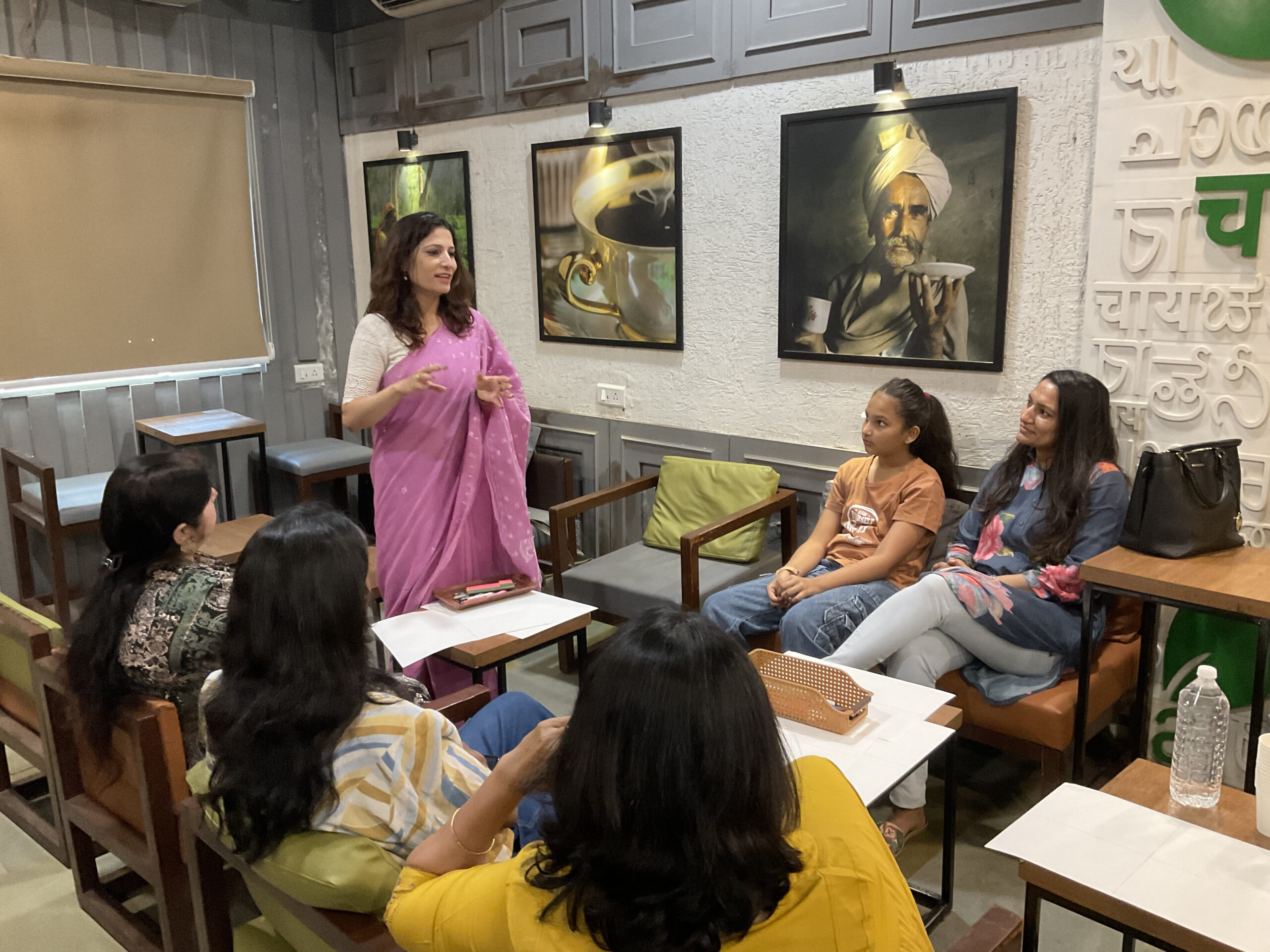
As conversation around emotional well-being gains urgency in classrooms and homes, there is a growing need for approaches that allow individuals, especially children, to express, reflect and heal without fear or pressure. Storytelling, often overlooked, offers such a space by giving emotions a voice where words may fall short.
Set against this context, Priyam Dave, Senior Correspondent, Education Edge Global, speaks with Ms. Neha Khanvani, educator, counsellor, storyteller, and founder of Pravah Counselling, on the theme Healing Through Stories; How Narratives Shape Emotional Well-Being. Through her work in international education and counselling, and via her digital initiative Pravah Counselling on Instagram and Facebook, Ms. Meha Khanvani uses storytelling to create accessible, culturally sensitive spaces for emotional reflection and healing.
Could you briefly describe your role at the Singapore-based international school, and your work with students and parents?
At the Singapore-based international school where I work, I lead a segment as an Academic Head. My role extends far beyond academics – it includes child safety, emotional well-being, and overall development. I work closely with students, parents, teachers, and leadership teams, ensuring that learning environments remain safe, inclusive, and emotionally responsive. Engaging with multiple stakeholders and keeping well-being at the core of decision-making is my primary responsibility.
What drew you to work at the intersection of education and emotional well-being?
Education naturally places you in close contact with people, their beliefs, struggles, expectations, and silent needs. Over the years, I began noticing that behind every academic or behavioural challenge lay unmet emotional needs, deeply rooted belief systems, or personality patterns. This realization intrigued me and pushed me to explore emotional well-being more deeply. What started as curiosity gradually became a conscious commitment.
How do you personally understand emotional health in everyday life?
Our emotions silently drive our decisions, actions, and performance. Emotional health, for me, is about awareness and regulation, understanding what you feel and why, especially in a world where external influences can easily overwhelm us. Emotional literacy is no longer optional; it is essential.
Was there a personal experience that shaped your belief in the healing power of stories?
Yes, very deeply. During a difficult phase in my life, stories became my quiet source of faith. When clarity was missing, they helped me hold on. During the COVID-19 period, I began consciously exploring storytelling as a healing tool and realised something transformative. I am the main character of my own story, and I have the power to rewrite it.
That insight changed everything. Life still brings uncertainty, but stories help me reflect, realign, and move forward with awareness. This personal journey became the foundation of Pravah Counselling, where stories continue to guide resilience, growth, and hope,
How do stories influence students’ emotional development in a school and family environment?
We instinctively relate to characters, whether in books, films, or everyday stories. Stories allow individuals to connect with their inner dialogue at their own pace and from a deeply personal lens. For students, stories act like reflective mirrors. They carry pauses, perspectives, emotions, and connections that make children feel seen, heard, and understood, often without direct questioning.
Why do narratives often resonate more deeply than direct advice or instruction?
Real change cannot be forced; it emerges from within. Narratives gently create an environment where realisation unfolds naturally. Stories nurture rather than instruct, allowing growth to happen organically, much like a flower blooming in its own time.
Can storytelling help students express emotions they find difficult to articulate?
Absolutely, Many students express themselves through characters, altering narratives based on their own emotional realities. These subtle shifts reveal what their inner child is trying to communicate. Stories give both wings and words to emotions that might otherwise remain hidden.
What are the most common emotional challenges you observe among students today?
Some of the most recurring emotional concerns among students today include:
- Trust issues and emotional insecurity
- Difficulty expressing feelings due to lack of emotional vocabulary
- Limited time for self-reflection because of overly packed schedules
- Absence of meaningful connections, with friendships often revolving around screens and online games
- Emotional distance due to parents having limited time for engagement
- Lack of a safe space or trusted individual to communicate with
Have you encountered situations where unexpressed emotions where unexpressed emotions began affecting a student’s behaviour or academics? How did you respond?
Yes, many times. One case that stands out involved a child whose parents were going through a turbulent separation marked by legal conflict and domestic violence.
The child displayed withdrawal in class, poor academic performance, aggression over minor issues, attention-seeking behaviour, and signs of neglect such as missing meals. There was also a noticeable silence around conversations involving parents.
The response involved a structured and sensitive approach:
- Initial discussion with the class teacher or parent to understand classroom/home patterns
- Conversations with both parents, focusing on the child’s emotional needs
- Suggestions for healthier parenting practices despite ongoing conflict
- Introduction of self-care tools such as writing journal
- Weekly counselling sessions for emotional regulation
- Creation of a trusted Adult Circle involving her grandmother or elder sister
- Confidence-building through small, consistent achievements
- Reassurance that she was not responsible for the separation or conflict
Over time, these interventions helped the child feel seen, supported, and emotionally safer, allowing healing to begin.
What can be the long-term consequence if such emotional struggles remain unaddressed?
Unaddressed emotional struggles can lead to trauma-driven responses, unhealthy behavioural patterns, emotional imbalance, and long-term barriers in relationship and self-growth.
Do you conduct counselling or guidance sessions, and how does storytelling naturally feature in these interactions?
Yes, I conduct regular counselling and guidance sessions. Storytelling plays a central role in these interactions because:
- It allows sensitive topics to be addressed with grace and emotional safety
- It supports narrative therapy by helping individuals externalize their experiences
- It creates space for art-based, mindfulness, and metaphorical activities
- It gently bypasses resistance and encourages self-reflection
Rather than offering direct advice, stories help individuals gradually explore different aspects of their current life situations.
How can stories help reduce fear or stigma around seeking emotional support?
When people view their struggles through third-person narratives, shame and guilt soften. Stories create distance without disconnection, making it easier to acknowledge vulnerabilities. Over time, this openness reduces stigma and encourages self-acceptance.
How can teachers and parents play an important role by using stories in everyday conversations to create emotionally safe and supportive environments for children?
Stories can transform everyday conversations when used mindfully.
- They build strong emotional connections
- Create opportunities for perspective taking
- Encourage conflict resolution without confrontation
- Promote respect and non-judgemental listening
- Offer meaningful ways to spend quality time together
Stories also remind children that life is not always about being right or wrong – it is about navigating situations with awareness and empathy.
How important is it for adults to be mindful of the stories they tell children about success, failure, self-worth and other life lessons?
Stories, metaphors, and timing have profound impact. They can open doors to deep conversations! Age-appropriate stories, rich visuals for younger children, and the freedom to interpret without extracting forced morals are crucial. Adults must guide, not dictate.
Pravah Counselling and Awareness
What was the raison d’être behind starting Pravah Counselling as a social media initiative?
Pravah counselling was created to normalise mental health conversations in a culturally sensitive and accessible way. Through platforms like Instagram and Facebook, it offers a safe, non-judgemental digital space where emotions are explored through stories rather than clinical language. The aim is to bridge education and emotional well-being while making support feel human, warm, and compassionate.
What gap in mental health awareness does this platform aim to address?
Pravah addresses the gap between knowing mental health matters and knowing how to care for it. It focuses on preventive emotional well-being, simplifies complex ideas through relatable narratives, and reduces stigma by making conversations approachable.
What did you choose social media as the medium for these conversations?
Social media is accessible and non-intimidating. It allows mental health conversations to unfold organically through shared reflections. For the audience, it offers connection and comfort; for me, it ensures continuity, reach, and meaningful engagement.
What message would you like students, parents, and educators to take away about emotional well-being and the importance of stories?
Emotions do not need fixing, they need space. Children may not always have the words, but stories give them a language for their feelings. Stories slow us down and help us listen, to ourselves and to each other. In a word obsessed with outcomes, stories remind us that healing and growth are processes. By honouring emotional well-being through stories, we nurture not just successful individuals, but compassionate, whole human beings.
Conclusion
As this conversation with Ms. Neha Khanvani reveals, storytelling is far more than a creative exercise, it is a bridge between silence and expression, pain and understanding. In classrooms, counselling rooms, and digital spaces like Pravah Counselling, stories are quietly reshaping how we approach emotional well-being. In listening to stories, and allowing children and adults alike to rewrite their own, we move closer to an education system, and a society that values emotional wholeness as deeply as achievement. And perhaps, in slowing down to hear these narratives, we rediscover something essential; healing often begins not with the answers, but with a story.