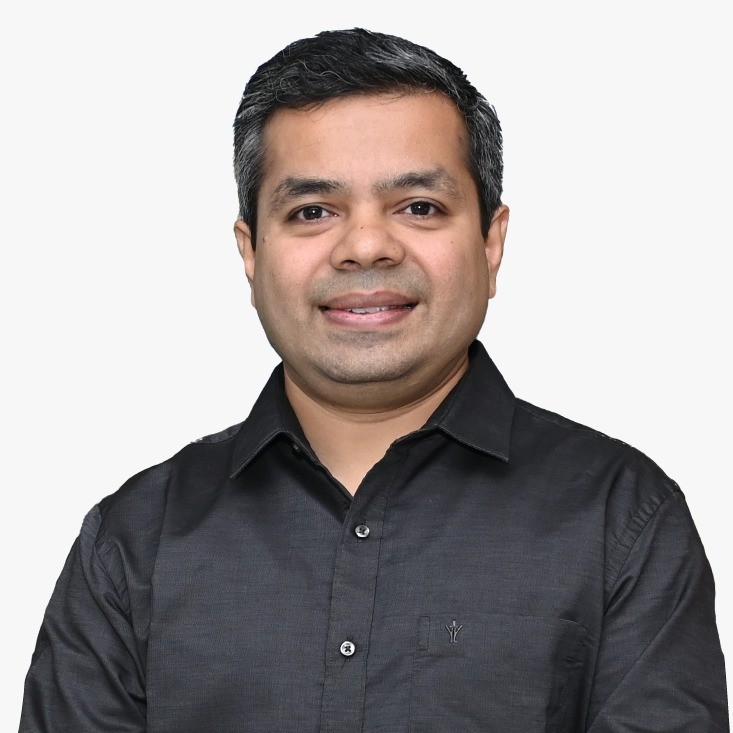

Inputs by: Sudhanshu Ji Maharaj, Founder, Vishwa Jagriti Mission
Real learning begins when students apply knowledge in everyday life.
For ages, the image of education has been firmly rooted in the classroom- well-organized desks, rhythmic scratch of pencils, and formidable stacks of textbooks. A major span of an individual’s life is impacted by their school life. Our minds have been trained to follow the generational belief of following what’s written in the textbooks and defining our lives accordingly. However, in the last few years, we have seen a major transformation in this belief system. The modern education policy focuses on holistic development, which is not simply defined by the knowledge of textbooks, but is influenced by experiential learning.
Here, it is important to mention that we cannot overlook the foundational knowledge. It forms the basic framework of a child’s personality. But, at the same time, it is important to address that merely relying on textbook knowledge may not take us far in life. We have often seen people failing to cope with problems, suffering from anxiety and stress. Enters the role of real learning, where we blend academic expertise with real-life application.
So, how do we transcend this journey? Let’s explore this today!!!
The Value of Experience-Based Learning
Many of us hear about experience-based learning, and the whole process looks complex because, as parents, we have been brought up in a certain framework of academic learning. But the fact is that we learn the best from our experience. For example, if a child falls down while carelessly running, the next time, the child will be more conscious. In contrast, the books teach us about being more aware of our surroundings. Such real-life experiences train our brains to be more alert.
Experience teaches adaptability. Life rarely follows a predictable script. When students apply their classroom knowledge to real-life situations, they learn how to think critically, find creative solutions, and adapt to change—skills that are essential in every aspect of adulthood.
Emotional Intelligence
It is said that the times to come will be highly challenging. To thrive through it, one not only needs to be intellectual, but at the same time, one should have the ability to tackle the challenges of life, the ability to think through the problems, and maintain strong bonds. These emotional and social skills, collectively known as emotional intelligence, are crucial for personal and professional success.
Life outside the classroom teaches empathy, patience, and self-control. When a student comforts a friend, resolves a misunderstanding, or helps a stranger, they are learning more than what any printed page can offer. These experiences shape character and strengthen the ability to connect meaningfully with others.
Emotional intelligence also prepares students to handle failures and disappointments. Real life teaches that making mistakes is part of growth. The ability to get up after a fall, stay motivated in difficult times, and remain compassionate despite challenges – these are the lessons that define true education.
Bringing the Academic Knowledge to Real World
The objective of education is not simply to learn what’s in the textbook, but also to apply the learning in real life. Only then does it add meaning to life. For example, Mathematics transforms from numbers on a page to useful skills in budgeting, shopping, and planning. Science comes to life when used to understand everyday phenomena—from cooking to fixing household issues.
For instance:
• A student who learns about nutrition in biology can make healthier food choices.
• A learner who studies literature develops empathy by understanding diverse perspectives.
• A history student can learn from the past to promote peace and social awareness in the present.
These applications empower learners to make informed decisions, contribute positively to their communities, and live more purposeful lives. This eventually help in framing a strong personality.
Lessons That Life Teaches Best
There is no better teacher than life; some lessons are not taught through formal education. These come only through real-life experiences and interactions.
• Patience: Waiting for the right opportunity, dealing with delays, and accepting that some things cannot be rushed.
• Courage: Facing fears, speaking up for what is right, and stepping out of comfort zones.
• Gratitude: Inculcating the habit of appreciating what we have in our lives is important. It instills a sense of humbleness.
• Empathy: Understanding another person’s struggles by experiencing hardship yourself.
• Problem Solving: Ability to overcome the challenges and confront the situation frames a strong personality.
These lessons are the foundation stone of our life. It prepares individuals to face the challenges of life and emerge as winners. Schools’ Moral Science classes, where the lessons of life are taught through storytelling.
The Role of Parents and Teachers in Real Education
In this situation, the role of parents and teachers becomes crucial. Guiding the children in the right direction becomes crucial. The best educators will not simply teach what is in the book; rather, they will interlink the same with real-world examples to make it more relatable.
Parents, too, have an essential role. Everyday situations—like managing time, resolving family disagreements, or contributing to household work—are opportunities for children to learn responsibility, discipline, and cooperation. When adults model good behavior, honesty, and compassion, children absorb those values naturally.
Building a Balanced Education
The goal should be to strike a balance between academic learning and practical education, and so it becomes important to mention about the Gurukul system of education. The ancient Gurukul system, originating around 5000 BC, provided a holistic education deeply rooted in nature. It emphasized foundational knowledge, practical skills, and personality development through subjects like language, science, and mathematics, alongside arts, sports, and crafts. Students lived communally, fostering brotherhood, humanity, love, and discipline. Daily chores, yoga, meditation, and mantra chanting further cultivated practical skills, physical fitness, peace of mind, confidence, intellect, and mindfulness.
This integrated approach of the Gurukul system offers valuable lessons for building a balanced education system today. In an era often dominated by rote learning and standardized tests, re-emphasizing practical skills, character development, critical thinking, and emotional well-being—all central to the Gurukul philosophy—is crucial.
Gradually, the current education system is undergoing transformation where the focus is now shifting from regular education to creating a mix of experiential learning, communal living (even in modern forms), mindfulness practices, and a stronger focus on arts and sports.
Conclusion
The purpose of education is not just to prepare for exams but to prepare for life. And life, with all its unpredictability and beauty, is the best teacher of all. When students begin to view learning as a lifelong journey rather than a classroom assignment, they move beyond textbooks and embrace the true meaning of education.