
In a world where visual technology is rapidly reshaping the way we learn, collaborate, and communicate, few leaders stand out as boldly as Pankaj Bellad, Business Head at LOGIC and Director at Online Instruments India Pvt. Ltd. Recognised as an entrepreneurial force with over 13 years of transformative experience, he has been instrumental in redefining user-centric innovation in India’s audio-visual landscape. In this exclusive interaction with Education Edge Global, Mr. Bellad shares insights into his leadership philosophy, the culture of design thinking at LOGIC, and the cutting-edge technologies—like the groundbreaking NeoAI—that are positioning the company at the forefront of the future of visual communication. This conversation offers a deep dive into the vision, values, and strategic foresight driving one of the industry’s most dynamic leaders.
LOGIC is known for its commitment to innovation and design thinking. How do you cultivate a culture of creativity and forward-thinking within your teams?
Innovation at LOGIC isn’t a department; it’s a daily practice, and it starts with a deliberate culture of ‘safe failure.’ Our product development is rooted in genuine ‘design thinking,’ meaning we start not with the technology, but with the human being at the center – the student, the trainer, the presenter. We ask: What is the fundamental pain point? This user-centric empathy, combined with cross-functional ‘idea sprints’ where marketing, engineering, and sales all contribute equally, ensures our forward-thinking is always grounded in real-world utility. We are building solutions that truly matter, not just chasing new technology.
The audio-visual industry is rapidly evolving. How is LOGIC staying ahead of technological shifts in areas such as digital signage, interactive displays, and immersive visual solutions?
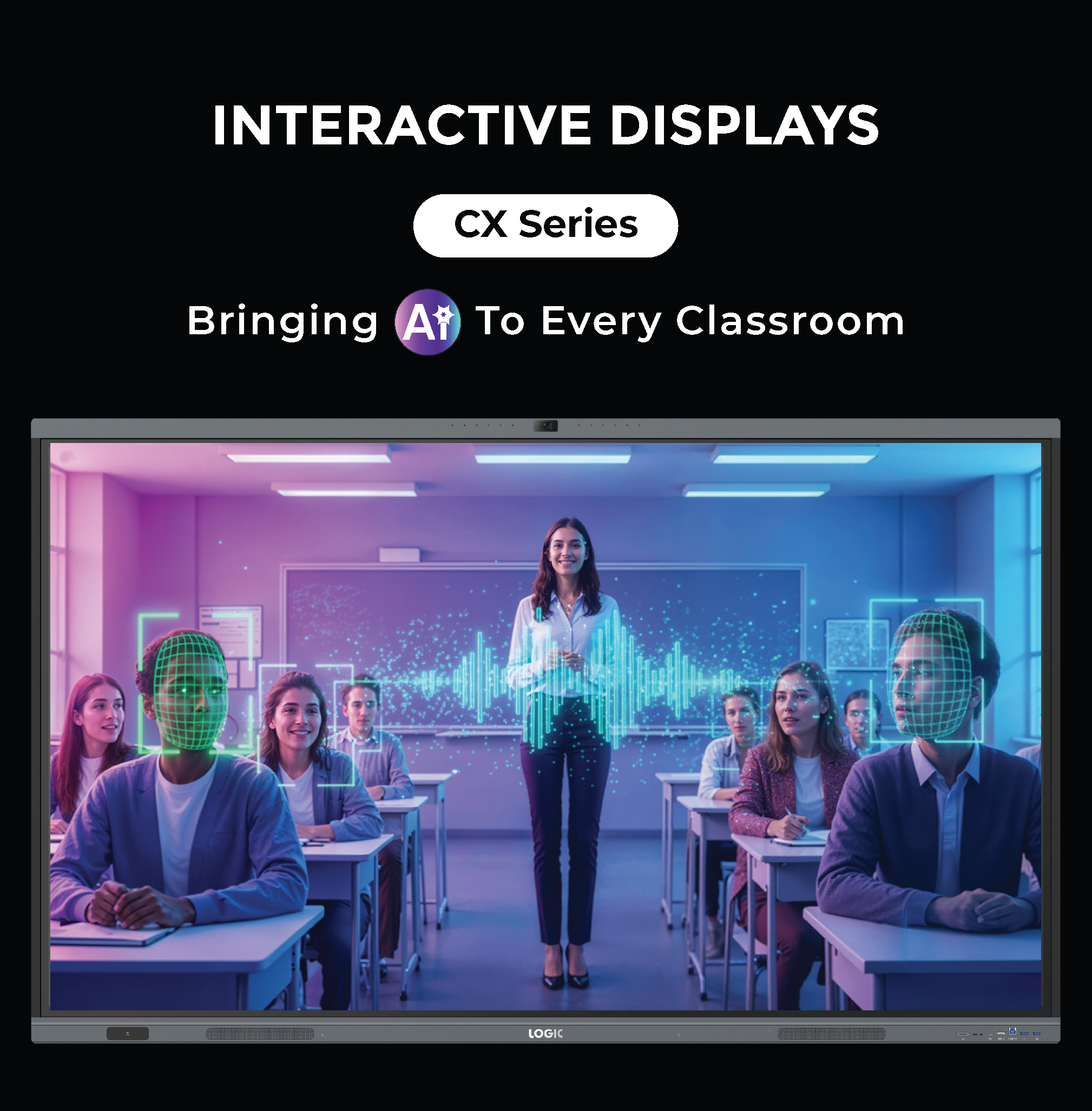
Our success in staying ahead is less about reacting to trends and more about anticipating human needs. For interactive displays, we have moved beyond hardware. We have introduced Logic NeoAI our in-built AI companion into our latest series. We aren’t just giving teachers a screen; we are giving them an assistant that can take a quick doodle and turn it into a detailed diagram via AI Painter, or provide instant context on any subject with ‘Circle It, Know It.’. We aren’t just keeping up with shifts; with NeoAI, we are defining the shift toward intelligent, automated visual ecosystems.
How do you balance the need for cutting-edge technology with ensuring reliability and long-term value for customers?
This is arguably the toughest balance, but it’s where LOGIC excels. We call it ‘Innovation with Integrity.’ Our guiding principle is that a technology must be robust before it is revolutionary. This means rigorous, real-world testing that goes far beyond industry standards especially for mission-critical applications like education and corporate training. We focus on industrial-grade components, efficient power management, and modular design. The ‘long-term value’ is built into our product lifecycle: a display that works flawlessly for five years is far more ‘cutting-edge’ in terms of total cost of ownership than a cheaper one that fails in two. This commitment to durability is a direct reflection of our brand promise.
LOGIC views displays as “gateways to new dimensions of human connection.” Could you elaborate on how this vision shapes product design and user experience?
The display has evolved beyond being a mere output device. It’s the new window through which we collaborate, learn, and experience the world. For us, a ‘gateway to human connection’ means that the technology must disappear. Our design philosophy is frictionless interaction. When a teacher is conducting a lesson, they shouldn’t be thinking about calibrating the screen; they should be focused on their students. When a team is collaborating remotely, the interactive panel must feel as natural as sketching on a whiteboard. This vision drives us to prioritize intuitive software, seamless multi-touch capabilities, and crystal-clear optics ensuring the technology amplifies the connection, rather than becoming a barrier to it.
What role does sustainability play in the development and deployment of LOGIC’s products and technologies?
Sustainability is no longer optional; it’s an ethical and business imperative. At LOGIC, our approach is focused on three pillars. First, Energy Efficiency our displays are engineered for low power consumption without sacrificing brightness or clarity. Second, Product Longevity as I mentioned, durability is key. A product that lasts longer generates less e-waste. Third, Supply Chain Responsibility we are rigorously vetting our suppliers to ensure ethical sourcing and responsible material use, pushing for higher recycled content where possible. In the deployment phase, especially for large-scale digitalization projects supported by the Indian government, our commitment to energy-efficient products ensures that the long-term operational footprint of the digital transformation is minimal, aligning environmental responsibility with national infrastructure goals.
What do you believe the future of visual communication will look like in the next decade, and where do you see LOGIC positioned within that future?
The future of visual communication is moving from passive viewing to intelligent, hyper-personalized, and blended reality experiences. It won’t be about one massive screen; it will be about a symphony of connected, smart surfaces, panels that recognize you, adjust to the light, and serve up contextually relevant data. Interactivity will be the default, not the feature.
LOGIC is uniquely positioned to lead this future. Our deep heritage in reliable, high-quality display technology, combined with our commitment to user-centric design, makes us the essential bridge between the technology and the user. We will be the ones engineering the foundational visual platforms that power the next decade of education, collaboration, and commerce ensuring that every digital touchpoint is intuitive, impactful, and trustworthy. We will continue to champion the idea that the right visual technology can unlock human potential.