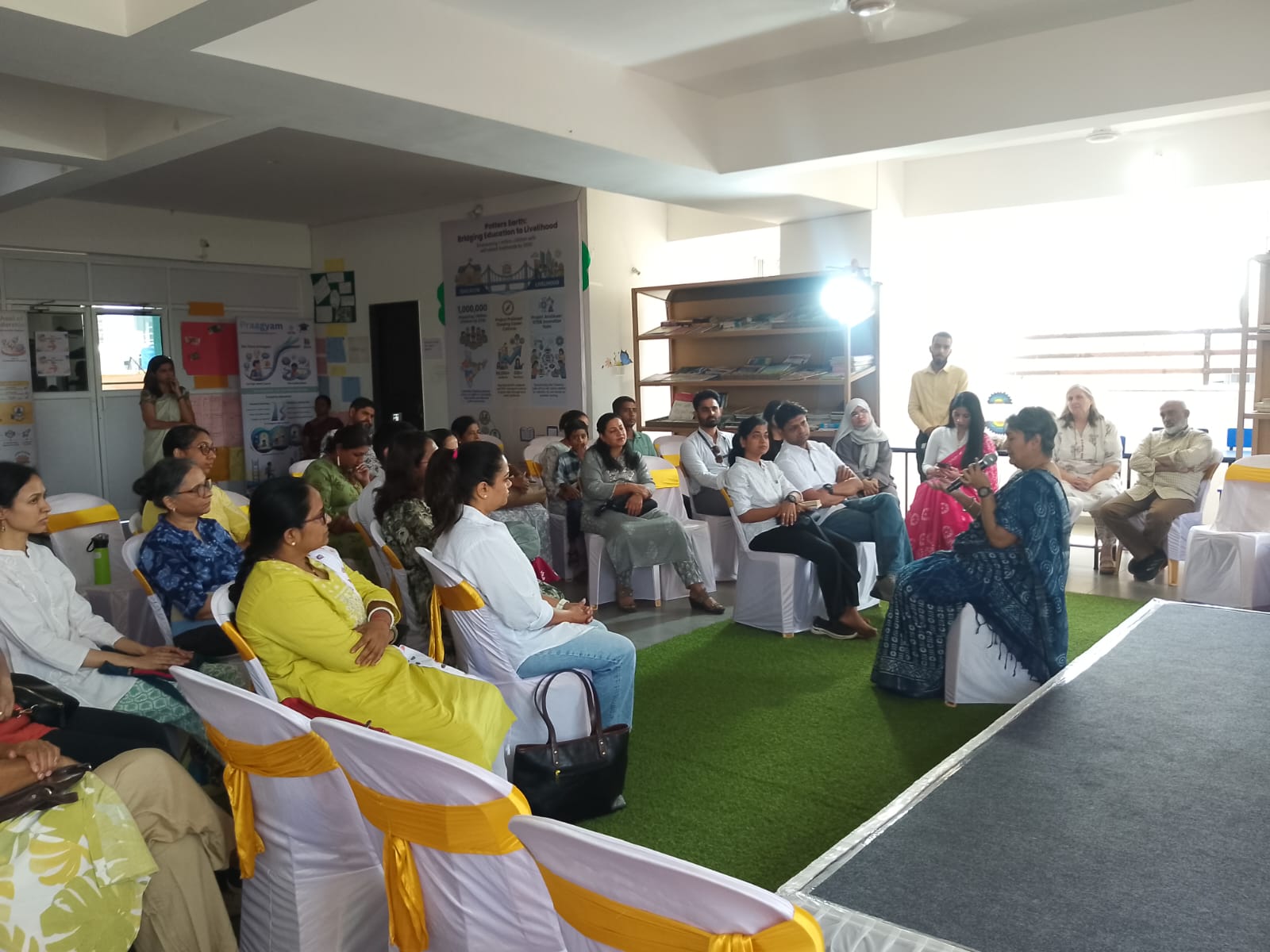
Pune: The Wonder School Pune in association with Aavishkar Inclusion Centre successfully hosted The Unlabeling Conference 2026 over the weekend. The event aimed to bust the myths around neurodiversity and reimagine how children are understood, supported and empowered across homes and schools. The event also marked the beginning of The Wonder School’s year-long initiative, The Unlabeling Project – Discovering Strengths. Designing Pathways.
Speaking at the conference, Anamika Dasgupta, Director, The Wonder School Pune, said, “The Unlabeling Conference began with a deeper reflection on the language we use for children. Words like ADHD or neurodivergent may sound politically correct, but if we look closely, they still carry implicit judgments. ‘Attention deficit,’ ‘hyperactivity,’ ‘disorder’ — these are inherently negative terms. Even when we try to avoid labeling, we often replace one label with another. When we say someone is neurodivergent, we must ask divergent from what, and who defines what is normal? It is unfair for one group of people to decide a standard and then tell another group that they are different and therefore somehow wrong. As educators who founded The Wonder School, we strongly believe that every child, irrespective of abilities, traits, or perceived differences has the right to learn in their own way. Differentiation in education is not an added service, nor something to be celebrated as ‘alternative schooling.’ It is the fundamental responsibility of every educational institution. The right to learn differently is simply the right to learn.”
Anamika added, “When we started Aavishkar Inclusion, we recognized that neurodiversity is still an evolving field of science. Growing up, many of us knew children who thought or behaved differently, but there were far fewer labels. Today, society often feels the need to categories children for convenience, sometimes reinforced even through policies and systems. We realized that while educators understand learning processes, we are not experts in nutrition, therapy, holistic health, or medical intervention. So, we chose to build a collaborative community, bringing together specialists, practitioners, parents and educators to collectively understand children better. For the past two years, Aavishkar has worked toward creating this ecosystem to remove stigma and misinformation surrounding neurodiversity, including misconceptions sometimes spread unintentionally even by so-called experts. Labels not only box children who do not deserve to be boxed, but they also cause society to lose out on immense talent because we focus on the diagnosis instead of the individual behind it. Personally, I would rather describe ADHD as curiosity-driven, passion-led hyper motivation and hyper focus — because when we shift the language, we shift perception and suddenly what was seen as a limitation becomes a strength many would aspire to have.”
Concluding on her thoughts, Anamika said, “The Unlabeling Conference is therefore a year-long and ongoing effort to challenge myths, share credible and evolving knowledge, and continuously apply these learnings within our own institutions. It is not about promoting Aavishkar or any one organization; it is about changing mindsets. Our goal is to move beyond labels and create a society and education system where children are understood as individuals first and not as a diagnosis. Where every child is given the dignity, opportunity and environment to thrive in their own unique way.”
Dr. Anum Zaheer, BHMS, M.D. (Hom) Homeopathic Consultant, PGDEMS, Bach Flower Practitioner, said, “I am elated that The Wonder School Pune along with Aavishkar Inclusion Centre has curated such a wonderful conference, as most parents are not ready to accept that their child is different. This is not an issue, they just need a little more attention, and needs to be treated in a more empathetic way. I am happy that people from their own specialties came together to spread awareness on the same. Parents came together to talk about their conflicts and struggles with having neurodivergent kids. I am happy to share that therapies like homeopathy have changed many lives. I don’t claim treatment does wonders overnight, but I am happy to have shared how it can help in emotional regulations such as anxiety and anger with Homoeopathy and bach flower curative powers. These help the neurodivergent kids in their day to day lives in a great way. Let us move from trying to “fix” these children to supporting them, accepting them and empowering them.”
Dr. Rashmeet Kaur, Paediatric Therapist and Founder of My Sensory Park, said, “I think events like these really work wonders. This is the time where inclusion is actually happening in action. A lot of people spread awareness but inclusion takes effort to put in action. When you are actually putting an effort and building a community together that is when we are working towards creating a better world and future for neurodivergent children. Organizations like The Wonder School Pune and Aavishkar Inclusion Centre with the events they are doing it’s going to help spread a lot of awareness and have inclusion in action. We need more such conferences like these in different parts of the world. The statistics show these days the increase in the amount of neurodivergent individuals with sensory processing issues, communication issues, we need to empathize and understand how to include them in society in a very effective way. All these initiatives are sure to create a big impact.”
The conference featured a series of engaging workshops for children across Arts, Dance and Sports, each designed to support expression, confidence and overall well-being. Art therapy is a powerful medium of expression. Children engaged with materials such as clay, crayons, colour pencils and watercolours, experiencing a range of textures that encouraged creativity and sensory exploration. Through art, they were able to communicate emotions and feelings that are often difficult to express in words. Dance therapy creates a safe and liberating space for neurodivergent children to simply be themselves. Movement becomes a language of expression, allowing them to communicate beyond verbal limitations. Activities involving movement, shaking and jumping helped children regulate their nervous systems, release energy and experience a sense of calm and emotional balance.
Sports therapy offers children an opportunity to participate, explore and connect through play and experience many may have previously missed due to social barriers. By engaging in sports, they discovered teamwork, joy and confidence, while reconnecting with an essential and often overlooked aspect of childhood. Sports therapy has also shown results in improving the child’s motor skills.