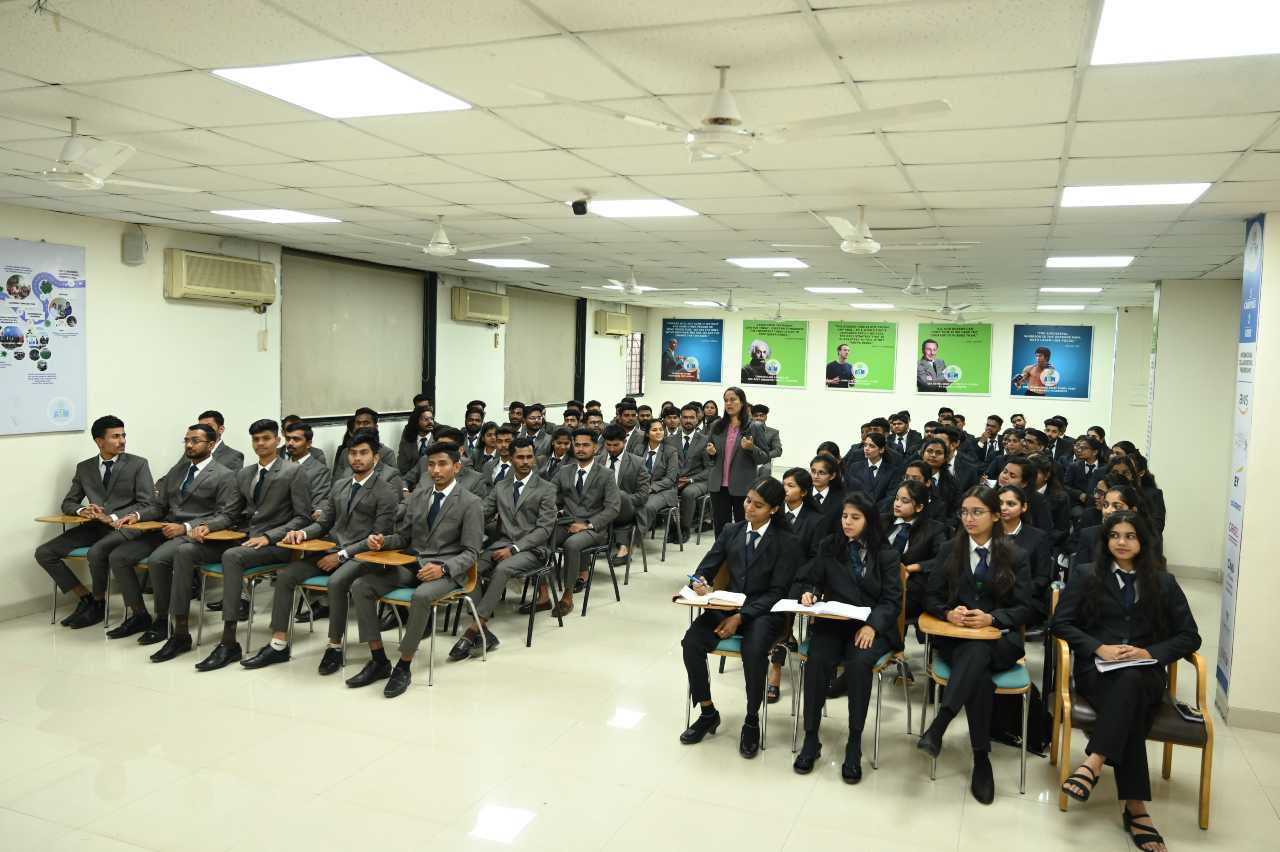
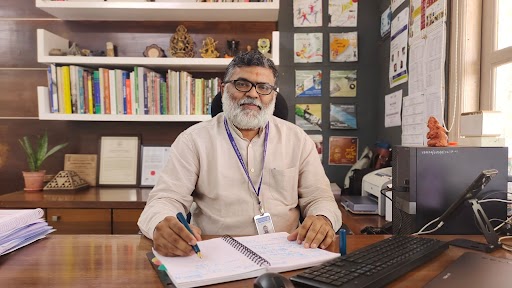
With architecture today standing at the intersection of sustainability, technology, and rapid urbanisation, the role of architectural education has become more important than ever. In this conversation with Education Edge Global, Dr. Prof. Anand Achari, Principal of VES College of Architecture, shares insights on how the relatively young institution is building its identity on the strong legacy of Vivekanand Education Society. In an interview with Sanjay Jadhav, Editor, Education Edge Global, he speaks about bridging the gap between classroom learning and professional practice, integrating sustainability and emerging technologies into the curriculum, and preparing future architects to design responsibly for complex urban and environmental challenges.
Vivekanand Education Society has a legacy dating back to 1962, while VES College of Architecture is a relatively young institution. How do you see its growth and evolution so far?
Vivekanand Education Society carries a rich academic legacy of over six decades. VES College of Architecture, though only three years old, has been built on that strong institutional foundation. In a short span, we have focused on establishing a distinct academic identity rooted in innovation, sustainability, and research-led learning.
From the outset, our approach has gone beyond conventional architectural training. We have integrated technology, urban systems thinking, and environmental responsibility into the curriculum. Our studios are designed to be forward-looking, our collaborations are expanding steadily, and our pedagogy emphasises inquiry and critical thinking. While we are a young institution, our vision is long-term, to nurture architects who understand not just buildings, but communities, infrastructure, and ecological systems in a holistic and responsible manner.
What are the biggest gaps between classroom learning and professional practice?
The most significant gap lies in replicating the complexity of real-world decision-making. In academic settings, students often work with hypothetical sites and flexible timelines. In practice, projects are shaped by budgets, regulations, clients, consultants, and governance frameworks. While we attempt to simulate these conditions, the unpredictability of practice cannot be fully reproduced.
Another gap is interdisciplinary coordination, working alongside engineers, contractors, policymakers, and communities. We address this through structured internships and live projects, but a learning curve will always exist. Our goal is not to eliminate the gap entirely, but to equip graduates with adaptability, confidence, and strong problem-solving skills.
Could you share examples of live projects or collaborations?
VESCOA uses live studio projects based in community involvement as a means of taking learning outside of the classroom. The Solar Decathlon India initiatives are a way for students to gain exposure to climate-responsive design; conducting sustainability audits; and developing new, affordable and market-ready solutions. This methodology will facilitate creating resilient and low-carbon paths to sustainability for buildings and communities. In addition to addressing specific community problems through projects like the Adivasi Skill Development Centre, where students are engaged with local communities to better understand their needs and propose solutions that are practical for their context.
How must architectural education evolve amid climate change and rapid urbanization?
Architectural education must shift from being purely design-focused to becoming systems-focused. Climate change and rapid urbanization demand that future architects understand not just buildings, but the larger ecological, social, and infrastructural networks in which those buildings exist. Students must be trained to think about water, energy, mobility, density, and resilience as interconnected challenges rather than isolated design considerations.
Education must also become more research-oriented and context-driven. Instead of only responding to briefs, students should learn to question assumptions, analyses data, and propose solutions rooted in local climate and community realities. Digital tools, simulation software, and urban analytics should support this process, but they must complement not replace critical thinking. Ultimately, architectural education must prepare students to design responsibly in uncertain conditions. The goal is to cultivate professionals who are environmentally conscious, socially aware, and capable of adapting to rapidly changing urban futures.
How is sustainability shaping the curriculum?
Sustainability is no longer treated as a separate or elective subject, it forms the backbone of our design thinking. From the first year onward, students are encouraged to understand climate, materiality, and resource efficiency as fundamental design parameters rather than add-ons. Every studio brief integrates environmental considerations, whether it involves a small residential project or a larger urban intervention.
We place strong emphasis on passive design strategies orientation, shading, ventilation, daylight optimization, and water management before introducing technological solutions. Students are also exposed to concepts such as lifecycle analysis, sustainable construction methods, and the social dimensions of sustainability, including equity and community resilience. By embedding these principles consistently across courses, we aim to cultivate architects who see sustainability not as a trend, but as an ethical and professional responsibility that informs every decision they make.
Do future architects need skills beyond design?
Absolutely. The architect of the future cannot operate in isolation. Every project intersects with policy, governance, economics, and community aspirations. Understanding regulatory systems is as important as spatial design. Social engagement and empathy are essential; as meaningful architecture emerges through dialogue. Entrepreneurial thinking and strategic communication also play vital roles, enabling architects to navigate complexity and lead responsibly.
How important is academic flexibility?
Academic flexibility is extremely important, especially in a field that is evolving as rapidly as architecture. The profession today intersects with technology, sustainability, policy, urban systems, and entrepreneurship, areas that cannot be addressed through a rigid, one-size-fits-all curriculum.
Flexibility allows students to explore emerging interests through electives, interdisciplinary studios, research projects, and varied modes of learning. It encourages experimentation, independent inquiry, and critical thinking rather than rote outcomes. More importantly, it prepares students to adapt, because the tools, regulations, and environmental challenges they will face five or ten years from now may look very different from today. An adaptable curriculum ensures that education remains dynamic, relevant, and aligned with the realities of an ever-changing professional landscape.
How are emerging technologies integrated?
Emerging technologies are integrated as tools for deeper thinking, not just visualisation. Students are trained in BIM, digital modelling, environmental simulation, and fabrication methods with a focus on practical application. We also encourage critical engagement with AI and smart city tools, ensuring students use technology strategically and responsibly rather than relying on it superficially.
How important is industry collaboration?
Industry collaboration plays a vital role in keeping architectural education aligned with real-world practice. It exposes students to professional expectations, project complexities, and evolving market realities. At VESCOA, we engage practicing architects and consultants through juries, workshops, guest lectures, and live studio collaborations with local bodies. These interactions provide practical insight while allowing students to test their ideas in realistic contexts, all while preserving academic depth and experimentation.
What advice would you give aspiring architects?
Stay curious and patient. Architecture is a demanding discipline that requires continuous learning, resilience, and sensitivity to context. Embrace technology, but remain grounded in human values and environmental responsibility. If you approach the profession with integrity and empathy, it can be an incredibly meaningful and rewarding journey.