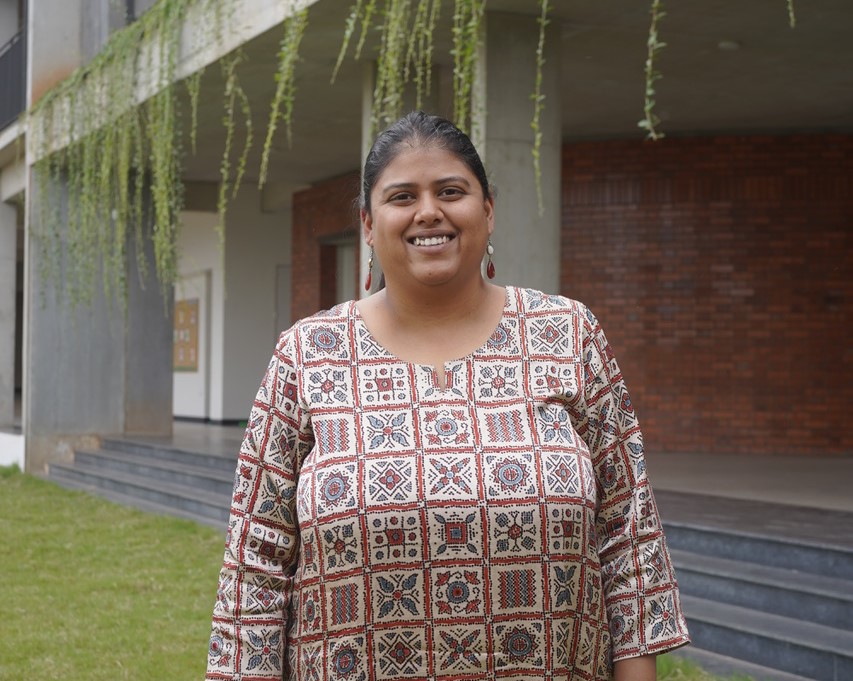

By: Fatema Agarkar, Educationist and Founder of ACE (Agarkar Center of Excellence).
Governments across the globe led by a decisive move by the Australian Prime Minister in December 2025 have taken a conscious stance to ban teens from accessing social media for there is significant research tabled to suggest that the consequences of unrestricted access to social media does have some worrying consequences not to mention non reversible trends, in some cases as documented by media, life threatening ones.
As educators in India, we have been discussing this for over a decade now, especially pre Covid that the exponential growth that technology is driving will need a channelisation especially for the younger generation. Many of us have voiced this as ‘untamed’ energy as a result of generative AI and what emerges as a challenge for developmental growth if this is not monitored and harnessed. The VUCA world as we kept repeating in various conferences and to parents in schools required us as adults including lawmakers to think about the journey ahead for those consuming information and perspectives purely driven by algorithms.
Early, Primary including Middle & High School years require exposure to learning and experiences that are age appropriate, scientifically nurturing and supportive of a child’s developmental needs from womb to maturity (what that age of ‘adulthood’ should be – 18 when you are eligible to vote for your country; 21 if you are a boy to get married or 25 if you are to consume alcohol is an altogether different matter to debate). It is well known that theorists, educators, psychologists over centuries have emphasised the need for social, emotional and intellectual stimulation including physical growth and mindfulness as part of childhood, and documented the detrimental impact in adult life when even one of these key components is compromised.
Anything in excess, unsupervised for a child therefore poses questions for those responsible and it is clear that the uncontrolled digital environment will therefore need some direction, controls and governance.
Ban or Balance isn’t even on the cards for me personally as a discussion point. As an educator, I feel we are not in control of the way the trajectory is panning out, and the rate of growth will continue, so it is about acceptance of what is and working out the boundaries that we can collectively create to safe guard the young.
The era of ‘influencers,’ and content creators as a mandate of our government as well where labs must be set up at a school level is our reality that we now adjust to.
It simply means ‘tuning-in,’ to times that are upon us and adapting. So any form of device that a child accesses today with an internet connection including a smartphone means that the child is a user of technology and therefore their journey with the device or other devices will be tracked and used by experts in some form of trend analysis to keep them ‘hooked’ and their internet experience will be ‘enhanced,’ by ensuring that more options are appealing to them without children even realising this. More ‘influences’, more ‘hooks’ more temptation lurking because a large part is unverified.
This is true of us adults as well, and one way to address is to stay away altogether from such access which may not be practical as digital devices have the advantage of learning, exposure and stimulation in ways that are productive as well.
The idea of ‘delayed exposure,’ comes to mind instantly and ‘sensitising’ students to potential dangers could be a way forward. Consider the thought process behind a driving license… rules, regulations, learning, consequences and receiving a license after theory and practical training is deployed enables an 18 year to drive. This could be a way to devise a well thought of ‘adaptation,’ manual and mandatory training for every child accessing digital devices in an age appropriate manner. Just like there is an Academic Bank of Credit (ABC) for students tracking their grades and marks, there could be a ‘earned’ digital point system for beginners, intermediate and advanced users to constantly upgrade which means access is possible with responsibility and awareness.
For me ‘banning’ means children will find ways to deceive and access, and the very nature of protocol means that there is a lure to it. Unsupervised this becomes a monster and this is what we need to safe guard against. At its very core, there are some amazing advantages of social media influence that is positive and helpful which gets clouded with the negative unvalidated or verified content. Children are not trained to spot what is a fact or a myth. And we need to educate them instead of shielding them.
Consider more conversations with students about what they are accessing on social media by ensuring that school/parental controls are in place, also be open as parents and educators to discuss trends with students so that these become healthy relationships. Guiding, warning, discussing and debating as opposed to judging them is a sensible way to look at the road ahead. I also feel digital dependence happens when the choices outside of these ‘locked’ spaces are unavailable so make sure sports, creative arts, performing arts, and community outreach are well planned so the ‘leaning’ on digital devices as a recreation is reduced to few hours as opposed to endless browsing.
In this world of AI, the importance of these ‘humane’ experiences therefore needs more presence and structure – more public libraries, community centers after school hours for play, games and fun especially over weekends for those who live in nuclear families with working parents is a way to think about the future alternatives to this digital device addiction. Curbs, bans in my mind make it more exciting for children to ‘break the law’and all to the problems.
In education circles we call this ‘pre skills,’ which means we orient and guide and get children ready for what to experience and also guide them. Media plays such an important part in this journey of exposure by sharing stories.
Think about raising a generation that is more aware, smarter and using the power of technology to its fullest advantage as opposed to becoming victims of a algorithm. I believe we need more discipline as adults when guiding and nurturing and also educating ourselves about responsible usage. We have got to develop a growth mindset and embrace the responsibility of how to educate ourselves young minds, instead of shielding. I for one believe in their inherent capability and capacity to think about consequences.